Mid game in Ratopia is the point where your colony shifts from basic survival to organized production, trade, and specialization. Enemy pressure rises, new service and work buildings become worthwhile, and your economy starts supporting higher-tier materials and a larger citizen count.
Colony priorities in the 31–40 citizen range
At this stage, colony management becomes less about simply covering basics and more about assigning citizens to specialized roles.
A balanced setup for 31–40 people is:
1 food worker
1 service worker
1 lifestyle goods worker
1 soldier
1 public servant
3 material workers
2 flexible workers
This is a good point to start thinking in terms of production chains rather than single buildings. If bread and ceramics are already available, you usually do not need to keep expanding food staffing much further.
Food and basic living needs
Once your colony can produce bread or ceramics, food handling becomes much easier and the food department can stay relatively small.
For lifestyle goods, this is the stage where having at least one of the following matters a lot:
oil
ceramics
leather bag
shoes
bat potion
Even one lifestyle good gives a useful happiness boost, so mid game is a strong time to begin covering this category.
Gold accessory use is generally not profitable before mid game ends. It becomes manageable only when you also have Laundry and other supporting conditions such as morale buffs. Even then, it is a luxury item that requires careful handling, despite its strong benefits to intelligence, production speed, and maintaining upper-class citizens.
Services and entertainment
Mid game is when service buildings start to matter more.
A Salon is a service entertainment building that restores morale while being used. It functions like a more demanding version of a bathhouse: it consumes more labor and resources, but provides a stronger recovery effect. Its +3 intelligence buff is also useful once you are past the early game.
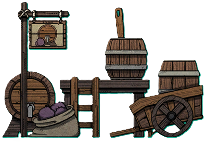
A tavern is also a valid service option. If you choose a tavern, you must also support it with a Wood Workshop and a Brewery, so it takes longer to become fully operational. That delay is the main drawback.
Soldiers and public servants
As enemies grow stronger and active zombie graves increase in number, military and civic staffing become more important.
By this stage, you are expected to add a 4th soldier. If the enemy threat feels higher, adding more is reasonable.
When your Smelter is running, it becomes worthwhile to build upgraded military and support facilities:
Barracks for spear soldiers or shield soldiers
Support Education Institute for medic soldiers
Combat Education Institute for legion soldiers
For public servants, the usual plan is to prepare for a Police Station. This typically waits on copper ingots from the Smelter.
Material production and processing
Mid game introduces a strong need for better material throughput.
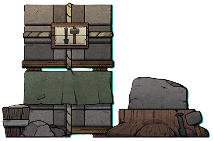
Stone becomes a major construction resource, so having 2 Masonry buildings helps keep construction moving smoothly. If you are not expanding aggressively, 1 Masonry is often enough.
The Smelter is slow enough that building 2 is recommended.
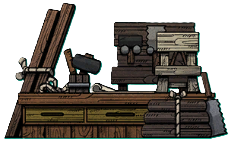
The Wood Workshop becomes important for tools, gears, and other crafted parts. If you are running a tavern, it also supports barrel production and beer production through the Brauerei.
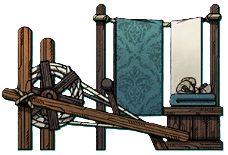
The Weaving Mill is especially valuable in mid game because it can produce profitable silk, while also covering practical early uses such as fabric and rope.
Materials that matter more in mid game
Several resources become much more relevant once your city reaches mid game.
Branch
Branch remains useful throughout the game. Early on it is mainly used for wooden ladders and spike traps. In mid game and later, it becomes important for ropes used in shafts and for versatile tools.
Branch production is not very efficient, and you cannot rely on importing it. Production improves greatly if you grow it from Vines, so self-supply or importing from Woodweb is the best approach.
Sand is the material for glass. It is not important early, but its value rises significantly in mid game once glass production and trade begin to matter.
Flower petals are available early and have many uses, especially for oil. However, most production chains using them are inefficient, and better alternatives exist for many outputs.
Öl is cheap enough that importing it is often easier.
Farbstoff and soap are easier to make from cactus flowers.
Once diplomacy is established in mid game and later, flower petals usually see much less use.
Trade goods and profit
Mid game is when trade-oriented production starts to pay off.
Good candidates for export include:
glass crafts
coral stone
silk
If you have surplus copper ingots or gold ingots, it is also a good time to build a Mint.
The mid game economy benefits from moving away from emergency production and toward surplus goods, especially those that can fund expansion.
What mid game should feel like
A healthy mid game colony usually has:
stable food production
at least one useful lifestyle good
stronger military coverage
a civic plan for police and education
enough masonry and smelting capacity to avoid bottlenecks
a growing trade economy
production lines for silk, glass-related goods, or other exportable items
This is the stage where your colony stops being a simple settlement and starts becoming a structured city.