Black Paint
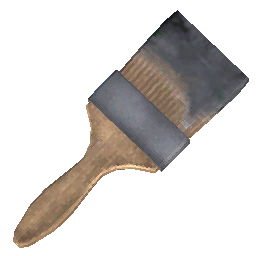
An ad hoc black pigment, but good enough for coloring items like barricades and bridges.
Overview
The pigment’s defining properties are its improvised origin and practical sufficiency: it does not purport to be a premium paint, but it is fit for routine tasks where a black coating is desired. Sources characterize it as ad hoc, medium-quality, and specifically suitable for painting roadblocks, barricades, bridges, and similar structures. Because of that limited scope,
- Typical uses: applying a black finish to barricades, bridges, roadblocks, and comparable placeable items that accept color changes. The item is intended for straightforward coloring tasks rather than advanced or protective surface treatments.
- Quality and limitations: the pigment is described consistently as improvised or of average quality; it reliably produces a black coloration but is not presented as a durable, industrial, or specialty coating.
- Practical considerations: carry or conserve
- Interactions: documentation emphasizes visual application; there is no source-provided evidence that
Official description
An ad hoc black pigment, but good enough for coloring items like barricades and bridges.
Other entities of this type
- 1057 Paint
- Acid Coating
- Antethermite
- Anti-Fungal Gelatin
- Aquarium Cart
- Blizzard Flask
- Blue Paint
- Bounce Coating
- Brown Paint
- Charging Flask
- Chef's Knife
- Cloak Scrambler
- Concussive Flask
- Construction Gauntlet
- Corrosive Flask
- Cyan Paint
- Decoy Watch
- Disruptor Coating
- Duct Tape
- Electromagnetic Coating
- Flashlight
- Foggy Coating
- GATE Defense Rune
- GATE NVGs
- GATE Security Key
- Gatekey (Tier 6)
- Geiger Counter
- Glitch Paint
- Glowstick
- Green Paint
... +57 (see sidebar for full list)