巨大城市’s power system turns generated electricity into a citywide utility for industry, logistics, comfort, and automation. The key to a stable grid is matching the right generator to the right storage and wiring layout, then extending power to remote work sites without wasting space or labor.
Core power flow
電力 is produced by generators, stored in batteries or 電力箱-type storage, and then supplied to buildings that consume power. A building that uses electricity does not need to be wired directly to every powered structure if it is within the supply range of an active storage point.
The main power chain is:
generator
storage
transmission to powered buildings
Some structures can also receive or send power across walls or long distances, letting you build compact networks or connect separated districts.
Generators
Manpower Generator
A basic power device that produces electricity using Ratizens. It is simple to operate but not very efficient.
機器鼠-based power generation is a practical way to turn idle automation into electricity. A 機器鼠 Charger consumes electricity to recharge 機器鼠 energy, while a 機器鼠 Generator can produce surplus power when the 機器鼠 has the right strength setup. This makes it useful for small remote installations or as a makeshift portable battery setup when combined with nearby storage.
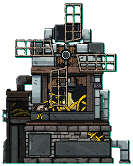
Wind power is a strong early-to-mid power option when you have the space. It needs wide open surroundings for optimal efficiency, and anything that blocks the air around it reduces output. Ladders and natural plants do not count as obstacles.
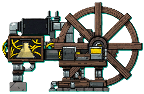
This generator uses flowing water and produces a significant amount of power. It is compact and can be very convenient once a water source is prepared, but its efficiency depends on water level and flow conditions. Too much water in the flow area can stop it, and the adjacent water-pump setup also has its own operating limits. A well-tuned water loop can provide excellent compact output.
Geothermal power uses Earth’s heat and is highly effective, but suitable locations are limited. It shines in underground or volcanic areas where lava-rich terrain allows strong output. Because placement is restricted, it is best treated as a high-value specialist generator rather than a citywide baseline.
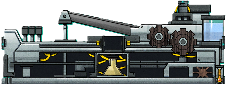
This is a high-efficiency generator that uses high heat. It is one of the strongest general power sources when you can supply the required heat source, and it is often a better long-term option than labor-heavy or low-density generators.
Solar Power Generator
Solar power is compact and clean, but it only works during the day and has the lowest output among the main power structures. It also needs a large clear space above it to reach maximum efficiency. Because night production stops completely, solar setups usually need substantial battery support.
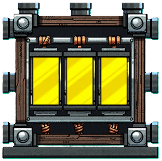
Batteries store electricity and allow power to be supplied without wires. 儲能電池 provides the same role in a more compact form with higher capacity. These are essential for smoothing out generator output, especially for solar and other inconsistent sources.
A smaller-capacity storage option relative to its size. It serves the same basic storage-and-supply role, but it is less efficient than upgraded storage solutions.
These advanced storage buildings are used to manage larger power networks and can share contents with other Quantum Storages. They are especially useful in long-distance or highly developed grids where local storage alone is not enough.
Wiring and transmission
Copperwire
Copperwire is a key construction material for powered cities. Because so many electrical buildings depend on it, it is worth mass-producing in advance.
Heavywire
Heavywire connects generators to storage facilities without blocking passage. It is ideal for open industrial corridors and keeps your layout cleaner than conventional exposed routing.
Wireroad
Wireroad is a wall-based transmission solution that connects generators and storage through walls. It reduces obstruction by embedding the wiring inside the structure, which is especially useful in compact cities.
These are the standard components for extending power networks. 傳輸塊 is useful when you want to move power through a layout without cluttering the main corridor with exposed wiring.
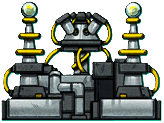
特斯拉塔 connects distant power networks wirelessly. It works in pairs and is the main tool for sending power between separated districts. The receiving side needs at least one battery. This makes it extremely valuable for underground industry, remote frontier bases, and surface-to-core power links.
A storage unit supplies electricity to powered buildings within its range automatically, so you do not need to run wires to every consumer. Proper storage placement often matters more than raw generator count.
機器鼠 power infrastructure keeps automated workers running. 機器鼠 Charger restores 機器鼠 energy, while 機器鼠 Station is a recharge-oriented building that should be placed strategically so 機器鼠 units do not run out of energy during long work routes.
充電維修站 recharges and repairs Ratrons, but the repair function lowers charging efficiency. Use it where maintenance is more important than maximum charging throughput.
Wireless Charger
Wireless Charger periodically restores the energy of nearby Ratrons and does so regardless of how many are in range. It is excellent for maintaining automated labor in busy or remote work zones.
Powered utility buildings
Small light
Small light uses electricity to illuminate the surroundings. It is a simple but important quality-of-life building for underground routes and work areas.
Electoilet
Electoilet is a cleaner toilet powered by electricity. It is a convenience upgrade that improves city quality of life.
加熱器 emits heat using electricity and allows plants to grow even in winter. It is useful for climate control and agricultural stability.
Broadcast Station
Broadcast Station itself does not directly entertain citizens; instead, citizens watch the produced content through 娛樂盒子. Since 娛樂盒子 is small and powered, it can be placed throughout the city to spread entertainment to remote workers and underground districts.
電力火葬場 uses electricity to burn anything continuously. It is a specialized utility structure for destruction or disposal tasks.
Electric devices and advanced facilities
Rader
Rader uses power to detect specific points. With enough electricity, it can also deal damage. It combines reconnaissance with offensive function, making it a versatile advanced power consumer.
電力陷阱 chains electricity to approaching enemies. It damages everything it touches, with the effect weakening over distance.
ElecliftPlatform
ElecliftPlatform launches faster elevators and comes with high-voltage lines to connect wires on both sides. It is useful in vertical city designs where fast movement and power routing both matter.
High 研究所 uses electricity to generate research points faster than standard laboratories. It is one of the main power consumers in a science-focused city.
Engine
Engine transforms electrical energy into mechanical motion. It is difficult to create but extremely useful for converting power into motion-based industry.
Watt
Watt is a power source that uses electric energy directly. It is powerful but dangerous and should be handled carefully.
Planning a stable power city
A good power network usually follows these priorities:
secure a reliable generator first
add storage early
keep transmission clean with Heavywire, Wireroad, or 傳輸塊
reserve 機器鼠 infrastructure for automation-heavy sites
scale toward high-efficiency generators once your city can support them
For compact cities, 水力發電機, 熱能發電機, and 特斯拉塔-based distribution are especially strong. For large or expanding cities, 風力發電機 fields, battery banks, and layered storage make the grid much easier to manage.
Power-heavy industries such as research, automation, lighting, and remote production all become far easier once electricity is treated as a citywide system rather than as a building-by-building concern.