Fusion Energy and Advanced Cryogenics Guide
If your factory has reached the point where ordinary power and mid-game production are holding you back, Fusion Power and the Cryogenic Plant are the late-game tools that open the next tier. Start by getting the chain unlocked in the right order, then build the cold-fluid loop deliberately, and only then scale into reactors, generators, weapons, and foundation. If you try to plan power or military output before the science and material chain exists, you will stall on missing late-game inputs.
Unlock the Aquilo-era chain in the right order
Treat the Cryogenic Plant as the gateway, not the finish line. Your first target is 

From there, push 


Do not branch out too early. The important chain is simple: get 
Build the cryogenic supply chain before you try to mass-produce anything
The Cryogenic Plant is where your late-game fluids become manageable. It crafts 


Here is the practical flow you should build around:
| Recipe | Inputs → Outputs | Machine | Time |
|---|---|---|---|
| Fluoroketone | |
Cryogenic Plant | 10s |
| Cooling hot fluoroketone | |
Cryogenic Plant | 5s |
|
  |
Cryogenic Plant | 20s |
 |
 |
Cryogenic Plant | 10s |
|
  |
Cryogenic Plant | 60s |
 |
|
Cryogenic Plant | 30s |
|
|
Cryogenic Plant | 10s |
| Railgun Turret |   |
Cryogenic Plant | 10s |
Set up the loop with purpose: make hot Fluoroketone, cool it, and route the cold form to the recipes that need it. The hot byproduct from
The biggest logistical constraint is Fluorine. It is found on 
Solve the advanced-material bottleneck before scaling the plant
The Cryogenic Plant is not the hard part; the hard part is feeding it. 

Check your interplanetary supply lines before you queue mass production. Superconductor is unlocked on 



This is also where 
Choose what to build first: power, mobility, or defense
Once the chain works, do not try to build everything at once. Pick one payoff and push it first.
If your base is starving for electricity, start with
If your goal is personal mobility or remote operations, prioritize 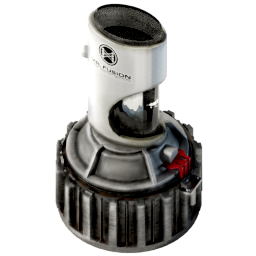


If you are defending space infrastructure or preparing for heavy anti-air work, move
Lay out fusion reactors and generators so you get the bonus you paid for
The
Each linked reactor increases the energy potential of the generated plasma by 100%, which means hotter plasma and more output. With no bonus, plasma is generated at 1 million °C; with a 100% bonus, it is 2 million °C, and so on. Different reactors in the same array can run at different temperatures, and the plasma averages out in the system.
The practical rule is this: start small, confirm that your generators are scaling with heat, and expand only after the plumbing is stable. A Fusion reactor has 2 fluid connections on each side, and the highest practical neighbour bonus while still leaving room to insert Fusion power cells is +500%. The cold Fluoroketone draw does not increase with neighbour bonus; it stays at 4/s per reactor, modified by quality. That means the layout challenge is adjacency and insertion space, not a runaway coolant bill.
As a planning target, a single reactor can support 2 generators for 100 MW, 8 generators for 400 MW, 18 generators for 900 MW, and 28 generators for 1400 MW.
If you want the late-game version of Factorio that actually changes your options, this is the order to follow: unlock the Cryogenic Plant, stabilize the cryogenic fluid loop, secure your cross-planet inputs, and then commit to either power, mobility, or defense. Do that, and Fusion Power stops being a tech tree curiosity and becomes the backbone of your next factory tier.