Automation in Trở thành đại đô thị lets you reduce manual labor by assigning work to citizens, robots, plants, and remote systems. It is especially important for keeping production running efficiently, expanding into distant areas, and cutting down on repeated micromanagement.
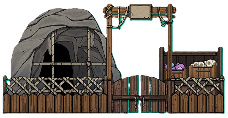
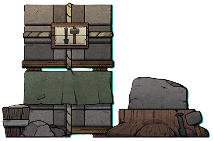
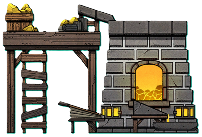
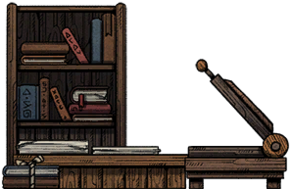
Trạm giao dịch điện is the central automation-related facility for letting citizens take over tasks that the leader would normally do. It also serves another function: automating hunting through submerged traps.
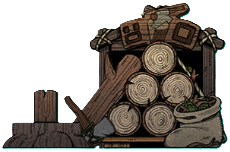
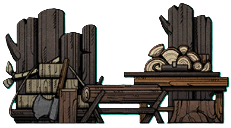
For gathering jobs, building a Trạm giao dịch điện enables automatic harvesting at nearby Gathering Place and Lò đốn gỗ buildings. Early food upkeep is important, so having around three Gathering Places is practical. Assigned citizens also handle miscellaneous tasks during their spare time.
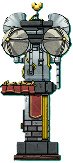
Tháp truyền tin issues commands to distant facilities via radio waves, removing the need to rely on Hộp thư chim. It is used to control remote structures directly, which makes it useful for spread-out colonies and outposts.
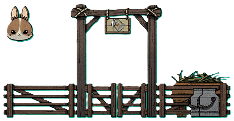
Pigeon Hộp thư chim also exists for giving commands from afar and managing nearby structures. Tháp truyền tin is the more advanced radio-based solution, while Pigeon Hộp thư chim covers remote command handling in a simpler form.
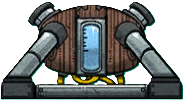
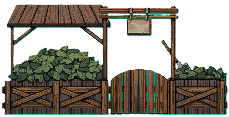
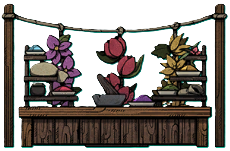
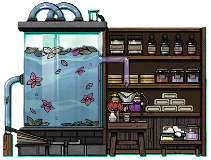
Hệ thống tưới tự động waters plants to increase production, so plant care no longer needs to be done manually. It is a straightforward way to automate crop upkeep in farming setups.
Tax Gate
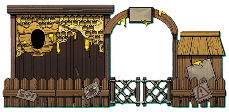
Tax Gate collects unpaid taxes from Ratizens passing through, so taxes no longer need to be gathered one by one.
Mining Company
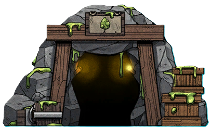
Mining Company is a hangar for prepared drones. When a nearby setting command is issued, the drones are deployed.
Engine
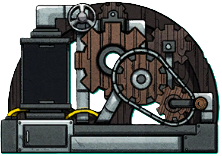
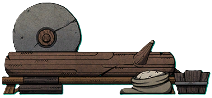
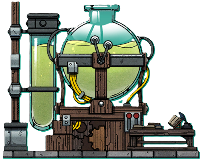
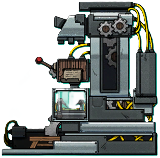
Engine converts electrical power into mechanical motion. It is a complex device, but extremely useful as a foundation for powered automation.
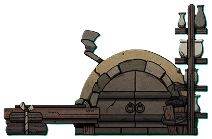
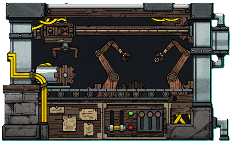
Chuột máy Factory produces Ratroids. The more delicate the manufacturing process, the higher the efficiency of the resulting unit.
Labor Ratrons can work in some Raw Materials buildings and most Production buildings. They behave similarly to Ratizens, but do not require Pias and can work longer before needing to rest and recharge.
Charging and upkeep
Ratrones do not need food, entertainment, or other daily needs to keep working, but they do need charging. Build a Chuột máy Charger alongside the factory so they can stay active. About 2 hours of charging is required for every 24 hours of activity. If a Charging Repair Shop is used, charging time becomes 1.5 times as long, or 3 hours.
Specialization
When producing a Chuột máy, choose one specialization: strength, dexterity, or intelligence. The chosen ability starts at 2 while the others are 0.
A successful creation mini-game grants +1 to the corresponding ability and significantly improves efficiency. Ratrones do not gain experience after creation, so they should be specialized carefully. Strength is generally the best choice because higher muscle increases carrying capacity at level 2, improving hauling efficiency.
The tasks a Chuột máy can perform depend on its specialization:
A Chuột máy with a +1 bonus can produce in one day about as much value as a Ratizen with ability scores around 9 to 10 who is using food, leisure, and high-end living support. If the creation mini-game fails, the Chuột máy performs closer to a Ratizen with ability scores around 5 to 6.
Because Ratrones do not consume food or lifestyle goods, their effective productivity can be very strong. This becomes even more apparent in remote or harsh workplaces where citizens would otherwise need heavy support.
Remote and hard-to-reach automation setups
Automation is especially valuable in distant, underground, or otherwise inconvenient locations.
In rough areas such as Mỏ Nocslin or underground sites, Ratrones can be assigned to Thermal generator work.
Than đá can be imported to keep power generation running without constant oversight.
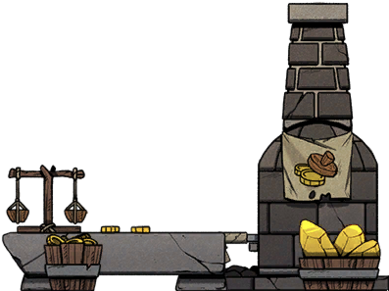
If you place a Lò luyện kim and Xưởng đúc tiền together, the resulting gold coins and coins do not need to be transported elsewhere.
Copper ore, gold ore, and coal can be imported, allowing an underground Xưởng đúc tiền setup with Ratrones working there.
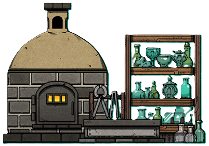
When working with coral clusters that are far from the base, placing a Xưởng chế tác đá quý near the cluster and having Ratrones process materials there reduces transport costs.
If you build workplaces underground or at the edges of the map, researching Tháp Tesla is worthwhile.
Practical automation use cases
Automation is most effective when it removes repeated movement or constant supervision.
Gathering Place and Lò đốn gỗ can be automated early to stabilize food and resource collection.
Sprinklers reduce the need to manually tend crops.
Trạm giao dịch điện-based control helps citizens take over routine tasks from the leader.
Tháp truyền tin extends command range to distant structures.
Ratrones are ideal for production chains that are far from housing, resource-heavy, or expensive to staff with citizens.
Drones from Mining Company can be deployed by command for local automation support.
Tax Gate eliminates manual tax collection.
Engine provides the mechanical power base for more advanced automated systems.
Choosing what to automate first
A good automation plan starts with tasks that are repetitive, far away, or expensive to staff manually.
Early game: automate gathering and crop care first.
Mid game: expand command range with Tháp truyền tin and remote control structures.
Industry: use Chuột máy Factory to staff production buildings that would otherwise need constant citizen attention.
Remote sites: assign Ratrones to resource processing, power generation, and specialized workshops.
Large colonies: use Tax Gate, Mining Company, and other automation tools to reduce routine management load.
For most colonies, automation is not just a convenience. It is what makes large-scale production, remote outposts, and long-running industry manageable.