The early game in 巨大都市 is about stabilizing food, unlocking basic industry, and preparing a small city that can keep expanding without collapsing under shortages. If you set up the right first buildings, the game becomes much easier very quickly.
First priorities: food, wood, and basic gathering
The safest early start is to lean on multiple gathering structures for natural resources. Building several resource collection facilities early lowers the difficulty a lot, because they can keep your city supplied while your population is still small.
Food
A strong opening usually assumes two gathering facilities for food, or a hunting setup if you have a ウサギ hole nearby. Early food production should focus on keeping citizens fed consistently rather than trying to build a fancy chain too soon.
Grill is one of the strongest early food support buildings. Its cooked dishes give flat stat boosts, which makes Ratizens faster or stronger for their jobs.
Grilled Meat gives +2 Strength
Grilled Mushroom gives +2 Dexterity
Grilled Fish gives +2 Intelligence
These bonuses matter immediately in the early game, because they improve work speed, carrying capacity, exploration, scouting, and general task performance.
Wood and wood products
A Lumber Mill is one of the first buildings you want. It produces wood, which is required for many other structures, and also creates Branch, another basic material used for construction and tools.
Wood demand is high and the Lumber Mill is not especially fast, so building two early is a good baseline. Around 30 population, it is common to have 3 to 4 citizens working in Lumber Mill production.
Early resource basics
Several simple materials are important from the start, even if they seem minor.
Dirt is abundant in the grassland biome, so it is easy to obtain from the very beginning. It is required for many buildings and is also used for dirt walls, making it a basic but essential material. It can also be broken quickly once your Strength is high enough.
Grass, Flower, and related low-value materials are often needed in large amounts early on, but they are not efficient to produce domestically. They are generally better imported if possible.
Grass is cheap but often in short supply early
Flower is useful early, but many of its production chains are inefficient
Sea Anemone fills a similar role as another cheap early material
Branch
Branch is one of the most important all-purpose early materials. It is mainly used for wooden ladders and traps at the start, then later for ropes and versatile tools. It remains useful throughout the game, but its production efficiency is poor, so import becomes attractive later. Growing or trading for Branch is much more efficient than relying on local production.
Logs and Treeskin
Log and Treeskin are the most basic plant resources. They come from cutting broadleaf trees or mining bark, and clearing large trees near the starting area can provide a substantial stockpile.
Managing early gathering
The best early economy comes from assigning citizens to gather natural resources while avoiding unnecessary specialization too soon.
Build several gathering facilities early
Keep food gathering high priority
If you add more than one non-grain target to a gathering setup, collection of grain drops because workers spend time on other resources
If you need mixed gathering, keep it limited or increase the number of gathering buildings
A good rule is to keep early gathering focused and simple rather than trying to make one building do everything.
Housing, recovery, and citizen support
Early survival is not only about food. Citizen support buildings help keep your population effective and reduce downtime.
A Royal Bed allows the Queen to recover health. There is no other recovery method until this bed is prepared, so it is worth setting up early. Research for it is already completed from the start; you only need a Weaving Mill and the required Fabric materials.
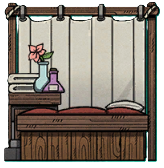
The Massage Bed is a very useful hygiene building early on. It provides a strong -10% mood decay rate bonus and uses Oil, which is available early. That makes it practical to run as soon as you can support it.
Pottery is a household item that reduces food consumption. Since early food is often tight, this has a large effect on city stability.
Sack
Sack increases how much cargo a citizen can carry. This is especially valuable in the early game, when Strength levels are still low and extra carrying capacity improves work efficiency.
Industry to build early
Once food and basic gathering are stable, you want simple production buildings that convert raw materials into the city’s core supplies.
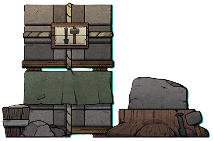
Masonry becomes important because stone materials are heavily demanded for construction. One Masonry is often enough if you are expanding slowly, but two help a lot if you want to build quickly.
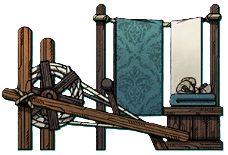
The Weaving Mill is useful from the early game because it produces practical Fabric and Rope, both of which support expansion and citizen infrastructure. It also becomes the foundation for later production chains.
Despite its name, Railroad can be made from wood, so it can be used early. The main limitation is that it cannot be placed on top of ladders, which makes large-scale layout a bit awkward.
Population setup for the first 10 citizens
A balanced early population setup helps the city stay functional without overcommitting too hard in one direction.
A practical early distribution is:
2 Food
1 Service
0 Living Goods
1 Soldier
1 Civil servant
3 Materials
2 Flexible
What this means in practice
Food: use two gathering facilities, or a hunting option if a ウサギ hole is available
Service: build an Event Venue
Living Goods: skip for now
Soldier: start training soldiers around the 10th citizen for safety
Civil servant: use the Research Lab
Materials: prioritize Lumber Mill production, or mix Lumber Mill with Weaving Mill
Flexible: use for construction, hauling, or whichever task is understaffed
This layout keeps the city productive without overbuilding too early.
Defense and early danger
You do not need a large army immediately, but you should not ignore defense.
Start training soldiers around your 10th citizen
The default unit from Training Hall is Militia, but it is much weaker than Guard
Nearby Zombie nest clusters can appear, so early caution is worthwhile
Rabbit is often the first wild animal players encounter. It is harmless if left alone, but it will retaliate if attacked. In grassland biomes, Rabbit hole can spawn up to 2 at a time, and a hunting setup can make citizens hunt them periodically. One Rabbit hole can yield around 4 rabbits per day.
Weasel Chieftain
The Weasel Chieftain is a manageable early boss and can be soloed. It is slow when not charging, and early-game weapons like an estoc or bow work well.
A simple tactic is:
Damage it from range or hit it with the estoc and retreat quickly
After enough damage, it charges across the arena
Build a 5-wide row of dirt blocks before it returns
Let it crash into the blocks to stun it
Repeat until defeated
What to avoid early
Some structures and materials are available early, but they are usually not the best first choice.
Berry Orchard is difficult as a starting structure and is not a good main food source; it is better as an ingredient source
Flower-based production is often inefficient, even though the resource appears early
Sand can be traded for early, but its main use, Glass, matters more in the mid game
Branch production is useful, but local production is inefficient enough that importing or growing better sources is preferable later
A practical early-game mindset
The early game is easiest when you keep your city narrow and efficient:
secure food first
build enough wood production to avoid bottlenecks
use simple support buildings that improve citizen performance
add defense before threats become a problem
expand industry only when the basic economy can support it
If you do that, 巨大都市’s early game becomes a steady ramp instead of a scramble.