Mid Game Guide: Oil, Science & Defenses
Mid game in Factorio is the phase where you transition from basic automation into larger, modular production, mid-tier technologies, and stronger defenses. You build infrastructure to scale science production (chemical and manufacturing sciences), expand oil and chemical processing, upgrade assemblers/furnaces and modules, and automate repair/maintenance with robots and logistics. This guide covers the practical goals, core systems, production targets, and defensive considerations for a successful mid game.
Goals of mid game
- Unlock and reliably supply Chemical science packs and Manufacturing science packs, and ramp Military science for combat tech.
- Transition smelting and assembly to higher-throughput buildings (Steel furnaces, Assembling Machine 2/3, Electric furnaces) and begin widespread module use.
- Establish oil refining and basic petrochemistry (sulfur, plastic, solid fuel options) to feed science and advanced items.
- Start deploying logistical automation: construction robots for rebuilding/expansion and logistic networks for item routing.
- Improve defenses: turret upgrades and artillery for long-range base defense/attacks.
Science and research throughput
- Mid game introduces Chemical science packs (requires petroleum derivatives like plastic and sulfur) and Manufacturing science packs (more complex, higher throughput).
- Synchronize production ratios so labs receive balanced inputs. Typical target assembler ratios (using Assembling Machine 3 as a baseline) to keep up with later research needs:
- Chemical science: high assembler count due to many intermediates.
- Manufacturing and Utility sciences are more complex and require higher throughput and upstream balance (refer to production planners for precise ratios).
- Labs consume science items as "units"; research time scales with the number of labs and research speed modifiers (lab count and module/research speed bonuses multiply into total research speed). Increase lab count and apply speed bonuses to reduce time.
Oil and chemical processing
- Establish crude oil processing into petroleum gas, light/heavy oil fractions, then set up basic petrochemistry:
- Produce Sulfur from water and petroleum derivatives in Chemical Plants; sulfur is a key input for Sulfuric Acid and Chemical science.
- Produce Plastic (from petroleum) as an intermediate for Chemical science.
- Decide fuel strategy: solid fuel can be made from oil products and offers high energy per item but requires a larger production chain and is often less desirable than using coal if coal is abundant. Choose solid fuel when oil is plentiful and you need to convert surplus oil products into a storable fuel.
Assemblers, furnaces, and modules
- Upgrade basic assemblers and furnaces as throughput needs grow:
- Steel furnaces double the output of Stone furnaces for plates and bricks; Electric furnaces match Steel furnace output without consuming coal.
- Assembling Machine 3 offers higher base speed and four module slots — the critical advantage in mid/late game is the ability to use multiple productivity or speed modules to tune throughput and efficiency.
- Consider using multiple Assembling Machine 2s in parallel with speed modules as an alternative layout: two Assembling Machine 2s with speed modules can exceed a single Assembling Machine 3 for raw throughput and may be more energy-efficient, but AM3’s four module slots enable high productivity-module builds that dramatically increase effective output per input.
- Use production planning: if an intermediate product is a bottleneck, add dedicated assembly lines for that item rather than cascading more steps into an already-saturated assembler.
Logistics and construction robots
- Construction robots are indispensable for rapid expansion and maintenance. They:
- Repair damaged entities when provided repair packs.
- Replace destroyed entities when replacement items are in provider/storage chests.
- Deconstruct marked entities and move removed items into chests.
- Build ghost entities from blueprints using items fetched from the nearest logistic chest.
- Mid game tasks for robots:
- Automate blueprint-based expansions and upgrades.
- Keep repair packs stocked and enable automatic repair of walls/turrets during attacks.
- Use robots to clear and rebuild rails, smelting columns, and factory modules during iteration.
Military and defenses
- Upgrade turrets and defensive coverage: mid game threats grow in size and spawns; improve turret density, walls, and ammunition supply. Use turret automation and logistic chests to keep ammo flowing.
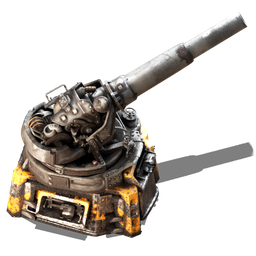
- Artillery turrets have very long range and operate without electricity (they are ammo-based).
- In automatic mode they target enemy structures (spawners and worms) within range; in manual mode a player uses an Artillery targeting remote to shell any point on the map. Manual shots require at least one loaded, powered artillery (or wagon) in range of the target location.
- Artillery shells explode in an area, damaging everything inside; they also reveal map chunks they traverse, enabling safe long-range base clearing and scouting.
- Keep military science production steady to unlock better weapons, armor, and turret technologies.
Practical layout and scaling advice
- Balance upstream supplies for chemical and manufacturing science — shortages of sulfur, plastic, or intermediate circuits will stall research. Prioritize stabilizing these inputs before increasing lab counts.
- Modularize production: create dedicated modules for oil refining, sulfur/petroleum processing, plastic, and for complex science pack assembly. This isolates bottlenecks and makes scaling straightforward.
- When upgrading machines, plan power and pollution impacts. AM3 consumes more power and may emit different pollution levels depending on modules; two AM2s can sometimes be preferable where power or pollution is constrained.
- Use productivity modules where inputs are expensive (e.g., circuits, advanced components) and use speed modules where throughput is the limiting factor. AM3’s four module slots allow aggressive productivity builds for high-value outputs.
Common mid game pitfalls
- Underbuilding oil infrastructure: running out of petroleum gas will stall many mid-game lines (plastics, sulfur, lubricant). Expand oil production and set up cracking if light oil accumulates.
- Neglecting logistics: inadequate requester/provider chest placement or insufficient robot/building counts can break automatic construction and repair.
- Research imbalance: rapidly increasing labs without balanced science supply wastes resources; always match lab count to stable science production.
- Defense gaps: switching to long-range combat or advanced production attracts larger attacks; strengthen perimeter and use artillery to neutralize distant nests.
By focusing mid game on stable petrochemical supply, balanced science production, smart machine upgrades with appropriate modules, and automated construction/defense using robots and artillery, you create a scalable foundation for late-game technologies and rocket production.