Agriculture in 巨大城市 is the core of long-term survival and growth. It starts with gathering wild plants, then shifts into indoor farms and specialized facilities that turn water, nutrients, and labor into a reliable food supply.
Getting started
Early food comes from the wild: gathering camps can collect grass-like plants, wild grain, cave mushrooms, berry bushes, flowers, cacti, papyrus, and various trees. Wild grain, mushrooms, and berries are the most important starting food sources, but they eventually stop being enough as your population grows.
For the early game, the most practical path is to move from foraging to farms as soon as nearby wild resources begin to run out. 谷物 is the basic staple, mushrooms are fast and cheap to produce, and berries are better used as ingredients for stronger products rather than as a main staple.
谷物 is the most basic food in 巨大城市. Wild grain appears in grassland biomes, and rain can cause it to grow naturally on soil tiles. It is also used for brewing, milling into flour, and cooking.
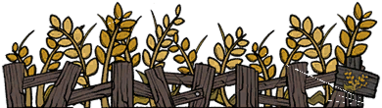
A Grain Farm is the standard indoor solution for stable food production. It works even in winter, unlike wild grain and gardens. 谷物 farms consume water, and fertilizer improves output.
Base production uses Water
Better production chains use Bone Powder
The best fertilizer setup also uses Lime Powder
谷物 is the main ingredient for bakery-style processing and for any large-scale food chain that relies on flour.
Mushrooms are a strong early crop because they are fast to produce and easy to set up. They are less filling than grain, but they require simpler inputs and give a solid harvest.
A Mushroom Farm produces mushrooms indoors and also works in winter. It requires nutrients and time, with production options that use either Bone or Log.
Mushrooms are especially valuable because they can be turned into Grilled Mushroom, which provides a stronger meal than raw mushrooms.
Berries are another indoor crop and can also be found in the wild as berry bushes. A Berry Orchard grows berries with water and nutrients.
Berries are not ideal as a primary food source, but they are useful as ingredients for better products. They are slower than the fastest starter foods, and their production depends on materials such as Water, Bone Powder, or Slime.
Grass Farm and Flower Farm are for smaller plant resources. 叶子 needs water and dirt, and flowers also need water and dirt. These farms are useful for maintaining a steady supply of plant materials rather than feeding the entire city.
Small gardens and large gardens
Minigarden is for small plants, while Treegarden is for larger plant resources, including tree-sized plants. Both let you plant owned seeds and grow them near the city, which shortens transport time compared with wild gathering.
These gardens grow like natural plants and still stop growing in winter. They do not require special soil conditions beyond normal placement.
Plantation Camp
Plantation Camp improves plant growth in the wild. It is best used on valuable or slow-growing plants, because its worker tends the plants and also handles miscellaneous duties afterward. It is most effective when the plants are already being harvested efficiently by nearby gathering camps.
Sprinkler boosts production by watering plants automatically. It increases plant growth speed within a range of 3 tiles on both sides, for a total practical area around the device. It works well even when a large garden plant is only partly inside the range.
Indoor farming rules
Indoor farms are the safest way to stabilize food. They remove dependence on wild growth and allow harvesting during winter. This is especially important for:
Grain Farm
Berry Orchard
Mushroom Farm
Flower Farm
Grass Farm
水 supply is the main bottleneck for most agriculture, so a steady water system matters as much as the farm itself.
Water is found as water blocks and can be scooped into a carryable form.
Dirt is a soft nutrient-rich soil used for cultivation, building, and pottery.
水 can also be produced or collected through world systems such as rain and dew collection. A stable supply is essential because farms consume water constantly.
Bone Powder is used as fertilizer for Grain Farm and Berry Orchard. It also has other uses, but farming is one of its main roles.
Lime Powder is important for advanced grain production. It is used in the best fertilizer mix and is also needed for glass production, so it becomes especially valuable later.
A 谷物农场’s output improves with fertilizer. Without fertilizer, a farm produces less food than when using 骨粉 or 石灰粉. The full support chain also includes water handling and milling, so the real efficiency depends on the entire production line, not just the field itself.
Processing food
Grills and grilled food
A Grill turns raw ingredients into cooked food with flat stat bonuses. This is one of the strongest early support buildings because the bonuses directly improve rat tasks.
Grilled Meat gives +2 Strength
Grilled Mushroom gives +2 Dexterity
Grilled Fish gives +2 Intelligence
These meals are valuable because they help specialized workers do their jobs better. Grilled food is especially useful in the early game when stat boosts matter more than pure hunger recovery.
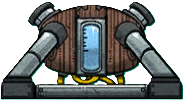
If you want to use a Bakery or Kitchen, you also need a Flour Mill. The mill processes grain flour and the salt needed for cooking.
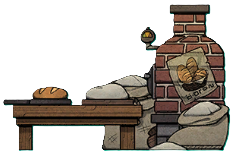
面包店-style processing is one of the best ways to convert grain into higher-value food, but it requires a more developed supply chain than raw farming.
Animal and aquatic food production
Fishfarm
Fishfarm grows fish using grain-based feed. It provides a stable supply of well-fed fish and is a good way to expand food production once basic farms are established.
Rabbitfarm
Rabbitfarm breeds rabbits and produces milk. It requires enough feedstuffs to sustain breeding.
Beefarm
Beefarm keeps bees safely and produces honey and wax. It is not a food farm in the same sense as grain or mushrooms, but it belongs to the agricultural production chain because it turns managed animals into useful resources.
Marineaquarium
Marineaquarium is a seawater farm that can produce aquatic life. It is less efficient than specialized setups, but it can grow any aquatic creature.
Wild food, seeds, and cultivation
Many wild foods can be domesticated:
Grain becomes farmable grain
Berry becomes orchard-grown berries
Mushroom becomes farm-grown mushrooms
Grass, Flower, and Cactus can also be cultivated
Tree resources such as Broadleaf Tree, Jungle Tree, Thorn Tree, Ash Tree, and Crystal Tree can be grown from their seeds
This is what makes agriculture scale: wild gathering opens the path, but seeds and farms turn that into permanent production.
Seasonal behavior
Wild plants and gardens stop growing in winter. Indoor farms avoid this limitation for crops such as grain, berries, mushrooms, flowers, and grass.
Some plant systems can still function in winter if they are supported correctly, but ordinary outdoor cultivation is season-limited.
Practical early-game priorities
A good early agricultural setup usually follows this order:
Gather wild grain, mushrooms, and berries
Build gathering support near dense wild plants
Start Grain Farm as soon as wild food is no longer enough
Add Mushroom Farm for fast, cheap food
Use Berry Orchard for ingredients and support foods
Expand into Grill production for stat-boosting meals
Add processing buildings such as Flour Mill and Bakery once grain supply is stable
For a growing city, the key is not only producing more food, but also improving food quality and worker efficiency through cooked meals and stat bonuses.