Rocket Launch and Satellite Logistics Guide
Unlock the rocket chain in the right order
If you’ve reached the point where you want to launch rockets, send Satellites, and start pulling space science back to your base, the hard part is no longer unlocking the idea — it’s building the whole chain so it actually runs. Start by planning your research in the same order your factory will need the materials: 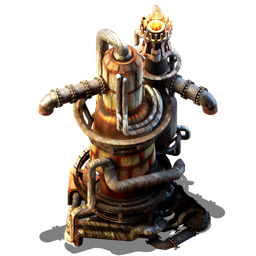
Do not treat the Rocket silo as a single-tech rush. Its research asks for Concrete, 


Set up the fuel and orbital-materials pipeline before you build the silo
The biggest mistake is building the silo before your oil system can feed it.
Here is the core chain you should have ready before your first launch:
| Item | Inputs → Outputs | Machine | Time |
|---|---|---|---|
|
  |
 |
15s |
 |
  |
 |
3s |
 |
   |
|
5s |
 |
  |
|
30s |
|
  |
|
30s |
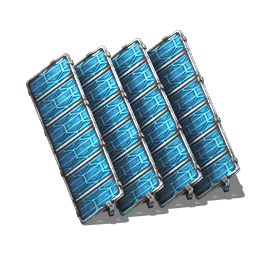
Use that table as your build checklist, but do not stop at the ingredients on paper. A Satellite also pulls in Solar panel,

Place the silo and landing pad so your first launch can actually happen
Before you expect your first launch, place the Cargo landing pad somewhere on the planet. It does not need to be near the silo, and you only get one per planet, so put it where the returned products will be convenient for the rest of your factory. If you forget the pad, the rocket cannot launch at all, so build it early and treat it as mandatory infrastructure.
Once the pad is placed, site the Rocket silo wherever your layout works best. The silo itself is a late-game building made from Steel plate,
At this point, your goal is not just to place a silo, but to make sure it can be fed continuously. Build the production lines for Rocket fuel,
Feed the silo with rocket parts and choose the right payload
Your first launch should be built around automation. One Rocket part takes Processing unit,
If your goal is victory, any first successful launch will trigger the victory screen. If your goal is science, prepare a Satellite instead. Launching a Rocket with a Satellite returns 1,000 Space science packs to the Cargo landing pad about 29 seconds after launch is triggered, so that is the payload you should standardize on once you have a stable launch line. From that point on, the silo becomes a repeatable science engine rather than a one-time milestone.
Do not improvise this step. Keep one Satellite ready, keep the Cargo landing pad clear, and use the Launch button or Send to orbit automatically once the silo has a payload. If you want recurring science, build for repeat launches from the start instead of treating the Satellite as a special case.
Avoid the common throughput bottlenecks when you scale launches
Once your first launch works, the next problem is throughput. 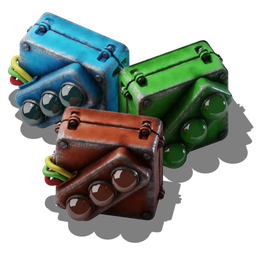
The base-game full launch cycle takes 3,684 ticks, about 61.417 seconds. The important breakdown is that assembling 100
In Space Age, the Rocket silo can buffer a second Rocket and skip the door close/open animation, which is a real improvement for repeated launches. When that buffer is ready, the cycle drops to 1,617 ticks, about 26.95 seconds, assuming the rest of your build can keep up. That makes buffered launches much smoother, but only if you can sustain the rocket part rate needed to feed them. In practice, your job is to keep the silo from starving, keep the Satellite pipeline stocked, and keep the Cargo landing pad ready to receive the returns.
If you want the shortest path to reliable space science, focus on three things in this order: stable Rocket fuel production, automated Rocket part supply, and a dedicated Satellite assembly line. Get those right, and the Rocket silo stops being a trophy building and becomes one of the most valuable production loops in your factory.
Pages featured in this guide
- technologyOil processing
- itemRocket fuel
- technologySolar energy
- itemUtility science pack
- technologyPlanet discovery Fulgora
- itemSolid fuel
- fluidLight oil
- buildingAssembling machine 1
- itemRocket part
- itemProcessing unit
- itemLow density structure
- buildingRocket silo
- itemSatellite
- buildingSolar panel
- buildingAccumulator
- buildingRadar