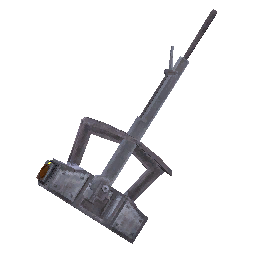
Lever

CategoryLight & Power
lever
Category
Light & Power
Weight
2
Stack size
1
Official description

A mechnical lever that can toggle whether or not power is allowed to flow through it.

Overview

Lever is a simple mechanical item that controls whether electrical or other power may pass through a connection. It functions as a manual on/off switch: when set to the pass position it closes the circuit and allows power to flow, and when set to the cut position it opens the circuit and prevents power transmission. The Lever is a physical control you place in a power line or on a powered object to gate energy on demand.

Levers appear wherever manual control of power is required. They are purely mechanical devices and do not themselves generate power; their role is to alter a circuit’s connectivity so other generators, conduits, and consumers can be enabled or isolated. Because the Lever directly changes whether a circuit is complete, it is the primary tool for isolating equipment for repair, creating simple user-operated circuits, and implementing manual overrides in larger power networks.

Practical usage and interaction notes:

  • Installation: place the Lever so it intersects the power path you wish to control. Once placed, toggling the Lever changes whether the linked circuit conducts power.
  • Manual control: the Lever is intended for player or character-operated switching; it provides immediate, deterministic control over power flow without requiring logic components or automation systems.
  • Safety and maintenance: use a Lever to isolate machinery or sections of a grid before servicing them. Turning a Lever off protects downstream devices from incoming power during repairs or reconfiguration.
  • Segmentation and zoning: place multiple Levers to divide a power network into independently controlled zones. This allows selective activation of subsystems without affecting the rest of the network.
  • Fail-safe behavior: because the Lever is mechanical and simple, it is useful in situations where electronic or programmable controls may be unavailable or undesirable. It provides a reliable physical method to interrupt power.
  • Combining with other components: while the Lever only permits or blocks power, it works with generators, conduits, switches, and powered devices to create functional arrangements—e.g., using a Lever to control a single machine or to gate power into a larger distribution line.

Limitations and considerations:

  • The Lever does not modify voltage, current strength, or timing; it only changes connectivity. Do not expect it to regulate power levels or to perform automatic logic functions by itself.
  • Because operation is manual, the Lever is unsuitable where automatic or timed switching is required unless combined with additional automation devices.
  • Being mechanical, the Lever’s behavior is deterministic and visible; plan its placement so operators can readily see state and reach it when needed.

In summary, the Lever is the straightforward mechanical tool for allowing or denying power flow in a circuit. It is best used for manual control, safety isolation, and simple zoning of power networks.

Official description

A mechnical lever that can toggle whether or not power is allowed to flow through it.

Other entities of this type

Last updated: