Aquatic Farmhouse
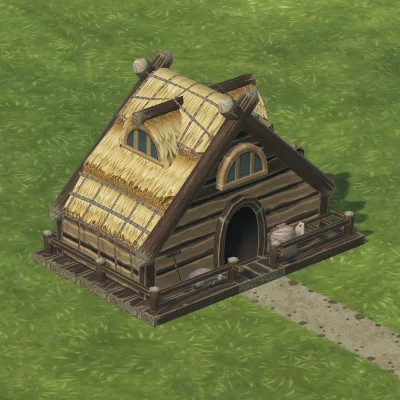
Overview
 Aquatic Farmhouse is a Timberborn building that enables colonists to cultivate aquatic crops. It must be constructed above water: place it adjacent to or over flooded tiles, lakes, or rivers so farmers can access submerged crop plots. Although the crops grow in water, workers cannot operate inside flooded buildings, so the structure itself remains above the fluid surface while farmers descend to the planting area using stairs or slopes.
Aquatic crops require a fluid depth of less than 1 to be planted. The two primary aquatic crops are  Spadderdock and Cattail, and both yield inedible ingredients that must be processed into Food through production chains:
- Spadderdock produces Spadderdock ingredients that are processed on Grills. Grills consume a small but steady supply of
 Logs. Each Spadderdock ingredient yields three Grilled Spadderdock.
 - Cattail produces
 Cattail Roots that are milled into
  Cattail Flour at Gristmills; Gristmills require Power and
  Gears to operate. One
 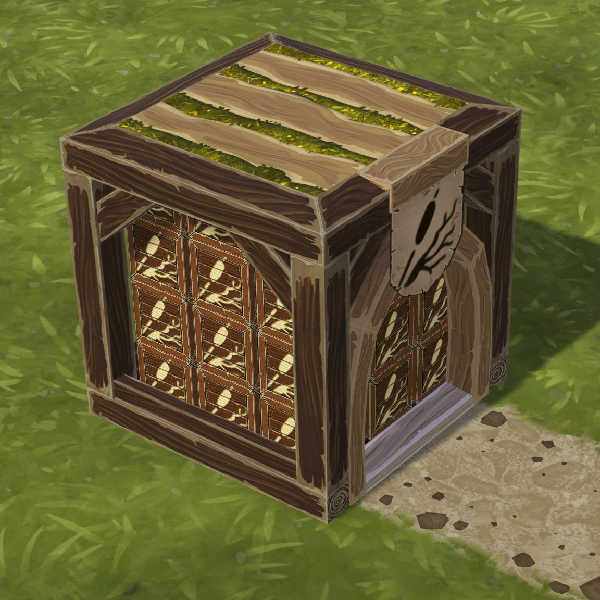 Cattail Root yields one Cattail Flour, which is baked in Bakeries into four Cattail Crackers. Baking consumes Logs in the process.
Practical notes and usage guidance:
- Build the Aquatic Farmhouse over shallow water (fluid depth < 1) so crops can be planted and harvested. The farmhouse building itself must remain dry on its footprint; flooded interior tiles prevent work.
- Provide access from the farmhouse down to the water level with
 Stairs or Slopes so farmers can reach crop plots.
 - Aquatic farming is best used as a low-intensity, high-yield late-game food source once the necessary processing infrastructure (Gristmills, Bakeries, Power, and Grills) and supply chains (Logs, Gears, Power) are established.
- Plan storage and transport: processed goods (Grilled Spadderdock,
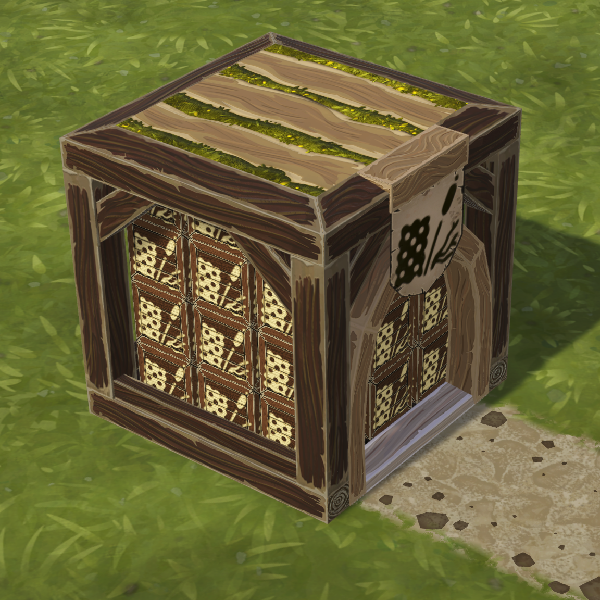 Cattail Crackers) need storage and distribution like any other food, and their production facilities should be sited to minimize travel time.
 - Aquatic crops do not directly produce edible food; expect to invest in processing buildings and resources to convert raw yields into consumables.
Other entities of this type
- Advanced Breeding Pod
- Agora
- Aquifer Drill
- Aquifer Drills
- Badwater Discharge
- Badwater Dome
- Badwater Pump
- Badwater Rig
- Bakery
- Banners
- Banners/Custom Banner Images
- Barrack
- Barriers
- Beaver Bust
- Beaver Statue
- Beehive
- Bell
- Bench
- Bot Assembler
- Bot Part Factory
- Brazier
- Breeding Pod
- Builder Flag (Obsolete)
- Builders' Hut
... +162 (see sidebar for full list)