Lore & World Explained: Gravitas, Printing Pod Guide
The Gravitas Facility and its Printing Pod form the central backstory of Oxygen Not Included: a desperate, ethically ambiguous effort to preserve humanity by printing living colonists and manipulating time and matter. This lore explains why Duplicants exist, what drives the Facility’s key researchers and projects, and how strange materials such as Neutronium factor into the colony’s fractured reality.
The Gravitas Facility and the Printing Pod
- Gravitas is a research corporation that established off-world colonies using advanced cloning/printing technology. Their flagship device is the Gravitas Home Printing Pod, capable of producing Duplicants, resources, food, or items every few cycles.
- The Printing Pod prints copies intended to be near-complete recreations of human staff. It can print two or three Duplicant options at once alongside other non-person options; the pod emits light and has high decor, making it a useful early building.
- Printed Duplicants inherit fixed appearance, name, certain traits and interests. However, printed subjects do not reliably retain the donor’s memories; experiments (e.g., Experiment 7D) show clones lack conditioned memories and memory transfer is an unsolved problem. Research records discuss microanalysis that could force memory transfer but would destroy the original host.
- The Pod’s operation, energy consumption, and role in colony logistics are recurring concerns in the Facility’s logs. Printing consumes large amounts of power, a factor that influences several research decisions.
Key Projects: The Temporal Bow and Time Research
- The Temporal Bow is Gravitas’ flagship time-manipulation project, primarily championed by Director Jacquelyn “Jackie” Stern. It vibrates the fourth dimension to compress and expand time, producing vast energy but generating hazardous side-effects.
- Early test logs report controlled manipulations of time on micro-scales and discovery of vacuum-like effects between manipulated and normal time. While promising for energy generation, experiments produced unintended byproducts and dangerous phenomena.
- Director Stern pushed aggressively to apply Temporal Bow tech (even proposing integrating it with the Printing Pod), creating ethical rifts with colleagues who warned of catastrophic risks.
Neutronium: a Temporal Byproduct
- Repeated time experiments produced a mysterious metallic substance dubbed “
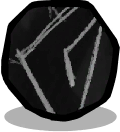
- Neutronium resists conventional removal methods. Research logs discuss attempts to break it down by reconfiguring temporal energy and hint at potential disintegration applications if stabilized. In the game world, Neutronium is effectively unobtainable by ordinary means and carries anomalous thermal and physical properties.
- Neutronium’s presence links to larger anomalies—Temporal Tears and surface observations—which suggest the colony exists within a fractured or otherwise altered region of space-time.
Bioengineering, Cloning Ethics, and Critter Research
- Gravitas’ Bioengineering Department, led by Dr. Olivia Broussard (security code B111), advanced printing and cloning techniques and preserved many of the Facility’s biological datasets. Broussard opposed certain ethically dubious experiments and ultimately distanced herself from some programs.
- Bioengineering work included cloning animals (e.g., raccoons and lab rats), conditioning experiments (which showed clones lacked original conditioned responses), and husbandry research into critters useful for food, waste processing, and terraforming (Hatches, Pufts, Morbs, Wheezeworts, etc.).
- Research notes treat critters as ecological tools: some species can process waste, terraform temperature, or be adapted to novel diets. Juvenile critters mature into adults over cycles; both wild and tamed critters follow life cycles, drop resources on death, and have morale/production states tied to happiness and domestication.
- Certain experiments and logs reveal a casual, sometimes callous attitude toward test subjects (e.g., disposal of animals), illustrating ethical tensions inside Gravitas.
Facility Personnel and Internal Conflict
- Director Jacquelyn Stern is the driving force behind the Temporal Bow and aggressive project timelines. Her ambition and risk appetite created conflict with other senior staff.
- Dr. Olivia Broussard served as head of Bioengineering and became increasingly concerned with ethical implications of time- and cloning-related research. Her brainmap later played a role in the colony AI.
- Other named researchers (Dr. Ashkan Seyed Ali, Dr. Holland, “Bubbles” Bubare, Dr. Devon Ross, Dr. M. Sklodowska) appear in logs and personal notes, contributing to robotics, engineering, and biology; their diaries and memos add color to the Facility’s human story.
- Internal memos and logs reveal standard corporate trappings—security protocols, promotional material, and administrative notices—juxtaposed with secret experiments and moral disputes.
Anomalies, Artifacts, and the Larger Setting
- The asteroid environment shows signs of extraordinary geological and temporal features: Temporal Tears,
- Public-facing corporate materials (promos, press releases) contrast sharply with classified research logs, underscoring Gravitas’ attempt to normalize or monetize dangerous technologies.
- Keepsakes, campus notes, and preserved cultural requests (e.g., Dr. Broussard’s request to include arts and cultural histories in implants) show Gravitas staff attempted to preserve human culture alongside technical knowledge.
Tone and Consequences
- Gravitas blends high scientific ambition with hubris: breakthroughs in time manipulation and printing promise salvation but produce intractable hazards. Ethics, safety, and humaneness are recurring themes.
- Many logs emphasize trade-offs—energy versus safety, rapid deployment versus careful research—and the tension between Director Stern’s urgency and Broussard’s caution frames much of the Facility’s downfall.
- The colony you manage is both a survival sandbox and a living remnant of these grand experiments: printed Duplicants, unstable materials, and a fractured environment all trace back to Gravitas’ attempts to bend time and save humanity.
This lore underpins in-game mechanics and atmosphere: why Duplicants are printed and imperfect, why strange elements like Neutronium exist and are untouchable, and why the world contains technological marvels shadowed by moral ambiguity.
Pages featured in this guide
- elementGranite
- buildingLadder
- buildingRocket
- buildingResearch Portal
- buildingFrozen Fossil
- buildingAlgae Terrarium
- buildingAnatomy Poster
- buildingAncient Specimen
- buildingBig Brain Jar
- buildingCeiling Robot
- buildingCrashed Satellite
- buildingCrushed Satellite
- buildingCryotank 3000
- buildingDirector's Desk
- buildingDoctorate Degree
- buildingGravitas Monument