Power Guide: Generation, Steam Turbines & Storage
Power is the backbone of every colony in Oxygen Not Included: it runs machines, automation, life support and industrial processes. This page explains generation options, transmission, storage and key interactions with heat and automation so you can design reliable, efficient power systems.
Overview of power systems
- Power is produced by generators (manual, burners, gas/steam, renewable, reactors) and special sources (Plug Slugs, critter-light farms, power banks).
- Power travels over wires and can be transformed between high- and low-capacity networks with transformers.
- Batteries store energy and issue automation signals (Smart Battery) to control generators.
- Many power sources interact with heat: some produce heat (burners, refiners, reactors, geysers) while others can delete heat (Steam Turbine when feeding a steam loop).
Generators — practical categories and tradeoffs
Early, mid and late-game options differ in throughput, by-products and heat.
- Starting option. Produces clean power but consumes duplicant labor and trains skills. Useful for early and remote tasks.
Fuel-based Burners (Wood Burner, Coal Generator, Petroleum Generator)
- Burn solid or liquid fuels to produce continuous power.
- Coal Generator is more efficient and cleaner than Wood Burner.
- Wood Burner produces lots of CO2 and heat; its fuel is renewable via Arbor Trees.
- Petroleum Generator burns Petroleum or Ethanol and produces CO2 and Polluted Water as by-products; it can be space- and logistics-intensive (ethanol distillers, etc.).
- Burners produce heat and exhaust gases that must be managed; automation (Smart Battery) prevents wasteful running.
Gas-fired Generators (Hydrogen, 
- Hydrogen Generator: very heat-efficient and relatively clean but hydrogen is a valuable resource with other uses; heat deletion depends on fuel temperature.
- Natural Gas Generator: efficient carbon-based generator; produces CO2 and Polluted Water. It can be placed in steam rooms to feed Steam Turbines directly because it emits little CO2 to the room.
- Converts heat in the form of steam into electricity while reducing steam to 95 °C water.
- Power output scales with steam mass flow and steam temperature; with full flow (2 kg/s combined across ports) and sufficient temperature it caps at 850 W per turbine (with multiple inlets bringing required mass and temperature).
- Turbine deletes heat equal to water SHC × mass × (T_steam − 95), and the turbine itself produces a small fraction of that heat back (10% + fixed operational cost in kDTU/s).
- Steam Turbines can be used for efficient heat deletion when paired with Thermo Aquatuners or high-heat sources (Steam Vents, Metal Refinery, kilns, reactors). Self-cooling turbine designs use the turbine’s exhaust water to cool the turbine and need careful temperature balancing.
Nuclear and special reactors
- Research/Reactor-type buildings (e.g., Research Reactor) move large amounts of heat into coolant and produce nuclear waste; they require large-scale heat handling and can expel very hot coolant/steam which can then be fed to turbines.
- Thermo-Nullifier (and similar advanced machines) delete heat and can be part of power/temperature strategies.
Other power sources
- Solar Panels: produce up to 380 W in unobstructed peak sunlight; average per cycle in constant unobstructed conditions is about 264 W. Solar power requires batteries for night coverage and protection from meteors in the base game.
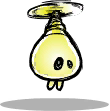
- Plug Slugs: sleep on wires and can provide up to 400 W wild (1600 W tamed) at night; can be used as biological power sources but depend on critter care and food.
- Rocket exhaust and specialized setups (capturing rocket steam) can be significant but are advanced and situational.
Heat interactions — generation, deletion and synergy
Power generation and heat are tightly linked; many mid/late-game setups exploit heat to make power or require power to move heat.
Heat-producing generators
- Most combustion and industrial buildings add kDTU/s to coolant or room. Example: Metal Refinery produces substantial heat and outputs heated coolant; this can be used to drive Steam Turbines.
- Geysers: Steam Vents and Hydrogen Vents produce enormous heat — Steam Vents produce high-mass 500 °C steam (very large heat output), Hydrogen Vents produce very hot gas at high mass flow (requires robust cooling).
Steam Turbine synergy
- Steam Turbine power is proportional to heat deleted from steam; high-temperature steam yields more deletable heat per mass and thus more power until the turbine cap is reached.
- There are optimal Aquatuner-to-turbine ratios:
- Using Water/

- Using Super Coolant: three Steam Turbines per two Thermo Aquatuners is effective and can be highly energy-efficient.
- Using Water/
- Self-cooling turbine designs can maintain turbine temperature using exhaust water if steam inlet temperatures and layout are tuned; these maximize power per heat deleted but require more turbines for the same total heat.
Heat deletion accounting
- Steam Turbine deleted heat: q_removed = 4.179 × m_dot × (T_steam − 95) (kDTU/s). The turbine produces back ~10% of deleted heat plus a small fixed cost (kDTU/s).
- Thermo Aquatuners move heat from liquids; pairing Aquatuners and turbines allows converting thermal energy into electricity with tradeoffs between Aquatuner power draw and turbine output.
Practical notes
- Some generators become heat-negative or heat-positive depending on fuel temperature. Heating fuel before combustion can change net heat output (relevant for Hydrogen Generators vs AETN comparisons).
- High-temperature exhaust (rocket, geyser) can melt or damage equipment; use materials and design to isolate or accept exhaust into space.
Power transmission, limits and safety
Wires and transformers determine how much a circuit can carry before overload.
Wire types
- Wire (basic): rated to about 1 kW (overloadable).
- Heavi-Watt Wire: rated to 20 kW (for large generator farms).
- Conductive Wire: carries twice normal wire capacity with lower decor penalty; advanced types exist (Heavi-Watt Conductive) for very high throughput.
- Wire Bridges allow crossing wires without merging networks.
Transformers
- Power Transformer connects a high-capacity input to a lower-capacity output; they protect low-capacity networks from overload and have an internal battery that can limit output to 1 kW when isolated.
- Transformers produce heat while they hold energy and their internal battery drains rapidly when disabled or disconnected.
Overload behavior
- Circuits that exceed wire capacity will overload and break; design with headroom and use transformers to isolate heavy generator banks from sensitive consumer networks.
Automation and regulation
- Power Shutoff and Switch allow control over power flow. Smart Batteries provide automation signals:
- Smart Battery outputs a Green signal when charge <= Low Threshold and Red when >= High Threshold. Use these signals to switch generators on/off to avoid wasting fuel.
- Typical pattern: Smart Battery (Low 50%, High 90%) controls continuous generators.
Energy storage
Battery types and uses
- Battery (basic), Jumbo Battery and Smart Battery are the main storage devices.
- Jumbo Battery stores more energy (40 kJ) and has higher heat/runoff but no automation output.
- Smart Battery stores less but provides automation outputs and has lower natural discharge (runoff). Use Smart Batteries to automate generators.
- Batteries slowly discharge (power runoff) and produce heat while holding energy.
- Transformers also act as small batteries and will prevent overload in some layouts.
Sizing advice
- For Solar Panels: in base game (meteors possible) you may need a large battery bank to store a full cycle’s worth of production. In many Spaced Out DLC situations where panels have unobstructed space, two Smart Batteries or one Jumbo per solar panel can suffice.
- Consider battery heat production when clustering many batteries.
Power banks (special)
- Power Banks (Metal, Eco, Uranium, Atomic) are craftable storage that behave differently (some vanish when emptied, some auto-charge). They are niche solutions for mission-style or special objectives.
Automation and maintenance
- Power Control Station (for Engie’s Tune-Up) costs microchips and Refined Metal; duplicants can manufacture and apply microchips to generators to give temporary boosts. The station requires duplicant operation.
- Use Smart Batteries and automation gates to enable generators only when needed. Set thresholds with hysteresis to prevent frequent toggling.
- Manual Generators set to Operate are efficient for early game; duplicants stop when connected batteries are full, so set the battery thresholds to avoid immediate stop-start cycles.
- Tune-ups: Power Control Station tinker tasks take time based on duplicant Machinery skill and cost Refined Metal per microchip.
Design tips and common setups
- Start with Manual Generators and a few batteries. Add a Smart Battery to automate a Coal or Hydrogen generator as your first continuous source.
- For mid-game, consider Steam Turbine loops powered by metal refineries, kilns, geysers or Thermo Aquatuners. Balance Aquatuner power draw against turbine output using the common ratios (2 turbines : 3 Aquatuners for water; 3 turbines : 2 Aquatuners for Super Coolant).
- Place high-heat generators inside steam rooms for direct turbine feeding (Natural Gas Generators can be built in steam rooms to feed turbines well).
- Use Heavi-Watt Wire for generator farms and isolate consumer networks via transformers to prevent overloads and simplify battery automation.
- Protect Solar Panels from meteors and heat (transparent tiles or bunker doors in advanced layouts) and plan ample battery capacity for night or storm coverage.
- When using biological power (Plug Slugs, Shine Bugs), account for critter welfare, food, and the intermittent nature of their output.
This reference condenses the practical mechanics: choose generation by resource availability and heat budget, size wiring and storage to the expected load, and use automation to avoid wasting fuel while preventing outages.
Pages featured in this guide
- buildingBattery
- buildingBattery Module
- buildingCoal Generator
- buildingCompact Discharger
- buildingConductive Wire Bridge
- building[DEPRECATED] Steam Turbine
- buildingHeavi-Watt Conductive Joint Plate
- buildingHeavi-Watt Conductive Wire
- buildingHeavi-Watt Joint Plate
- buildingHeavi-Watt Wire
- buildingHydro Switch
- buildingHydrogen Generator
- buildingJumbo Battery
- buildingLarge Discharger
- buildingLarge Power Transformer
- buildingManual Generator