Liquid Management Guide: Plumbing, Cooling & Tricks
Liquids are the game's fluid phase distinct from solids and gases. They flow under gravity, form tiles and layers by density, exchange heat with tiles and piping, can change phase (freeze/evaporate), carry germs, and power or break many systems—understanding liquid behavior and piping is essential for cooling, farming, resource processing and reliable automation.
Basic liquid properties and behavior
- Liquids occupy tiles and are affected by gravity: they flow across floors, down ladders and through open doors. A tile may contain up to one sizable “packet” of a single liquid type in pipes; open-tile pools can stack mass in one tile up to high values and can also depth-stack multiple tiles of the same liquid.
- Liquids do not mix on a per-tile basis. Different liquids will separate into layers by density when enough mass is present (lighter liquids rise above heavier ones).
- Liquids exposed to space are destroyed unless protected by Drywall or similar.
- Phase changes occur at 3°C beyond the listed freeze/boil points: liquids freeze at 3°C below their freezing point and vaporize at 3°C above their vaporization point. Phase changes inside pipes damage or break them.
- Very small packets—up to 10% of a pipe's capacity (i.e. 1 kg for liquids)—do not change phase while inside a pipe, letting you transport supercooled or superheated fluid safely. Do not merge such packets with normal packets or you risk pipe damage.
- Certain solid tiles and buildings are immune to pressure damage; otherwise, high liquid mass can crack tiles and cause leaks. Walls 3 tiles or thicker are immune to pressure damage if no pipes run through them.
Pipes, flow and throughput
- Liquid pipes transmit discrete packets. Each pipe tile can store a single packet and packets move once per second. This makes a single pipe's maximum theoretical throughput 10 kg/s (10 kg packet per second).
- Keep pipelines simple and directional: mix of sources and consumers on the same line causes pathfinding oddities and holdups. Use bridges, valves or shutoffs to force direction.
- Priorities with buildings:
- When a pipe passes through a building's input node, that input will always take priority if it can accept a packet.
- A building's output node yields priority to incoming pipes.
- Useful junction patterns:
- Top-up junction: primary source fed directly, secondary through a bridge so the bridge only supplies when the primary cannot.
- Overflow junction: direct the main flow to priority destination, let surplus route elsewhere via bridge behavior.
- Infinite loop: a pipe loop with a single bridge tile can circulate a packet around the loop (useful for coolant loops and buffers).
- Liquid Bridges: allow controlled bypassing and routing behavior (bridge input will fully drain another connected output until its destination is full; a bridge output connected to another input can block until that input empties).
- Liquid Valves: settable flow limiter; range 0 to 10,000 g/s, minimum nonzero 0.1 g/s. Changing the setting is a duplicant operation.
Pumps, reservoirs and vents
- Liquid Pump / Mini Liquid Pump: move liquids from open tiles into pipe networks. Pumps have limited range and detection area—pumping behavior can be "tricked" by placing small droplets in detection tiles to enable pumping of hazardous liquids outside of direct contact (useful for very hot liquids like Magma).
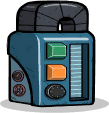
- Liquid Vents: placed at pipe ends to eject liquid into the world.
- Pitcher Pump and Bottle Emptier: duplicants can manually bottle and move liquids between pools; pitcher pumps cannot flood and can be used while submerged. Auto-bottling tricks (making emptier unreachable) can speed manual transport.
Heat and temperature interactions
- Liquids exchange heat with pipe segments; pipe material thermal conductivity matters. Radiant Liquid Pipe doubles the effective conductivity of the pipe material and inherits the material's melting point.
- Pipe segments exchange heat with their tile, and pipes do not exchange heat directly with adjacent pipe segments.
- Insulated pipe types and material choice determine how much heat moves through a plumbing network. Use Thermium,
- Small technical limits: the game uses 32-bit floats for temperature, and heat exchange will not occur if a tile's temperature cannot change due to float-precision limits. This leads to minimum ΔT requirements for some insulated tiles (e.g. very high for certain materials), so extremely large thermal reservoirs may not exchange heat with tiny ones.
- Buildings that perform heat exchange with their foundation tile (e.g., Steam Turbine) can be cooled by choosing conductive foundation tiles; keep the turbine’s other tiles insulated to avoid unwanted heat paths.
- Thermo Aquatuners, Liquid Tepidizers, Steam Turbines and other cooling machines have operational ranges and interactions with liquids (e.g., freezing risk). The Anti-Entropy Thermo-Nullifier cools gases strongly but can freeze liquids if used too long.
Phase-change tricks and hazards
- Evaporation/boiling and freezing can be used for resource processing (boiling Salt Water/

- Many advanced tricks exploit phase-change thresholds:
- Use 10% packet immunity to transport superheated or supercooled liquids through hostile areas.
- Use condensation teleportation (condensing gas in an Airflow Tile forms a liquid bead which teleports upwards) to move liquids without pumps.
- Liquid/gas diagonal swapping via drip liquid airlocks can be used to move gases/liquids in unusual ways.
- Flaking / partial evaporation: under specialized conditions a 5 kg "donor" can flake from a parent tile of exactly 5010 g, enabling precise heat/mass transfers; this is a technical mechanic used in some advanced setups.
Storage, containers and special liquids
- Prefer storing volatile resources as solids when possible. When fluids are necessary, liquid storage (Reservoirs, tanks) is denser and more compact than gas storage.
- Some liquids have unique roles and cautions:



- Molten materials (Liquid Steel,


- Visco-Gel: low-density liquid used as a one-tile liquid-airlock; solidifies into Plastic and has low density (100 kg fills tile). Heavy stacking can cause pressure damage.
- Gulp Fish /

- Nuclear Liquid Waste is corrosive: storing it in containers (Reservoirs) can cause ejection and corrosion behavior—handle carefully.
Fluid-based machines and automation
- Liquid-based machines perform many conversions: Water Sieve (
- For automation:
- Place sensors and shutoffs on pipe nodes to control flow direction and top-up/overflow logic.
- Prize efficiency: mechanical/minimal pump usage and gravity-fed systems save power.
- Be mindful that some buildings (e.g., Liquid Filter) require power to pass any liquid at all.
- Running pipes through building input/output nodes changes priority and can starve downstream consumers if not designed intentionally.
Farming, critters and liquids
- Many plants require specific liquids (Pincha Pepper,



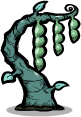
- Critters interact with liquids: Sponge Slugs inhale and release liquids on a day/night cycle; Slicksters produce Petroleum when melted;
- Use liquid waterfalls, stacking and submersion to automate plant and critter behaviors (e.g., Arbor Tree branch harvesting or faster Arbor Acorn generation).
Common tips and safety
- Avoid running high-temperature liquids through ordinary pipes—either insulate them or use high-melting materials for pipes and pumps. Pumps have overheat thresholds (e.g., base pump overheat 75°C;
- Use Liquid Reservoirs to buffer and smooth flows; remember they accept input while disabled and can be automated by toggling the base tile under them with a Mechanized Airlock.
- Watch for germ transfer: liquids carry germs and buildings that transform resources usually preserve germs in outputs. Decontamination showers can disinfect duplicants while producing Polluted Water.
- Be careful mopping or trying to remove very large liquid pools; pitcher pump + bottle emptiers or pumps at bottom tiles are reliable ways to empty pools.
- When designing coolant loops, use radiant liquid pipes or high-conductivity materials at heat-sink ends and insulated/low-conductivity pipes where you must prevent unwanted heat transfer.
This guide covers core liquid mechanics, piping and common use-cases. Mastering liquid thermal behavior, pipe throughput and the interaction of phase change with infrastructure unlocks advanced cooling systems, efficient production chains and resilient automation.
Pages featured in this guide
- buildingBuilding
- elementLiquid Methane
- buildingBottle Drainer
- buildingBottle Emptier
- buildingBottle Filler
- buildingInsulated Liquid Pipe
- buildingLiquid Bridge
- buildingLiquid Channel
- buildingLiquid Filter
- buildingLiquid Input Hub
- buildingLiquid Meter Valve
- buildingLiquid Pipe Element Sensor
- buildingLiquid Pump
- buildingLiquid Valve
- buildingLiquid Vent
- buildingMini Liquid Pump