Ice
Overview
Ice is a solid element used primarily as a cheap source of cooling and a convenient way to produce cold water. It appears naturally in cold biomes and can also be found in or around frozen areas where heat from nearby buildings or warm environments will melt it into 
Ice is especially useful because it can be turned into water without requiring any machine beyond heat exposure. Common uses include letting it melt naturally in a frozen biome, storing it in a container submerged in a pool so it gradually cools the surrounding liquid as it melts, or placing it in a warmer area so it melts quickly. It can also be consumed directly by the Ice-E Fan to cool nearby tiles, with the consumed Ice ending up as bottled Water.
Practical uses and interactions:
- Ice melts into cold Water, making it a simple early-game way to create a coolant supply.
- In a frozen biome, buildings themselves can provide enough heat to melt nearby Ice naturally.
- Storing Ice in a submerged container causes it to melt slowly while transferring its cold into the pool, eventually cooling the whole body of liquid.
- If Ice is placed in a region warmer than its melting point, it will melt rapidly.
- The Ice-E Fan consumes Ice to cool the surrounding environment and converts the consumed mass into bottled Water.
- Ice can be used as a building material for
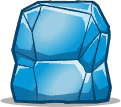
Ice is also relevant to temperature management because it can be used as a temporary heat sink before turning into Water. This makes it valuable in setups that need a simple, low-tech cooling source or a way to delay overheating in a small area. In contrast to machines that actively refrigerate an area, Ice depends on the environment’s heat flow, so its usefulness comes from placement as much as from quantity.
When used in decorative construction, Ice Block is most effective where its melting can be controlled. Since it is made from a consumable resource, it is best placed where the resulting Water will not cause problems or where the melt itself is part of the design.
References to this (16)
- achievementMINE_THE_GAP
- biomeAquatic Biome
- biomeBiome
- biomeForest Biome
- biomeTundra Biome
- buildingBiological Cargo Bay
- buildingFrozen Fossil
- buildingIce-E Fan
- buildingRocket
- buildingSpace Heater
- buildingTempshift Plate
- elementBrine
- elementSalt Water
- elementSolid Carbon Dioxide
- elementWolframite
- geyserSalt Water Geyser