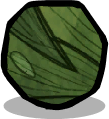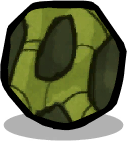
Slime

slime
State
Solid
Molar mass
4
Specific heat
0.2
Thermal conductivity
2

Overview

Slime is a natural material found primarily in the Swamp biome and in certain ruins. It is also produced biologically by Pufts and Puft Princes (they breathe Polluted Oxygen and excrete Slime) and can be harvested on some rocket missions (Organic Mass Fields). In its native tile form Slime behaves like a low-mass, moderately conductive solid that exchanges heat rapidly with adjacent tiles.

Slime emits Polluted Oxygen (sublimates) when exposed to open air, including when stored in containers, unless its outgassing is prevented by immersion in a liquid or by being held under a gas or liquid pressure of at least 1.8 kg/tile. If Slime is heated sufficiently it converts to Dirt; English documentation lists the conversion threshold as above 125°C, while some Chinese documentation records the phase-change at 128°C. Slimelung germs are associated with Slime: they proliferate in Polluted Oxygen and Polluted Water, and will rapidly contaminate nearby gas or liquid when Slime is excavated.

Germ mechanics and thermal disinfection require attention. Slimelung germs die at temperatures below 20°C and above 90°C, but to reliably disinfect a Slime tile it must be held at a disinfecting temperature (above 90°C) for a sustained time to eliminate all germs; if temperature drops below 90°C before all germs are killed, surviving germs will quickly repopulate (restoring to about 450,000 germs per 100 kg of Slime). Once a Slime tile has been successfully disinfected it will not become re-infected.

Common handling, storage, production and usage details:

  • Usage: Slime can be fed into an Algae Distiller to produce Algae (600 g/s Slime → 200 g/s Algae + 400 g/s Polluted Water). It is required for Dusk Cap domestic growth (4 kg per cycle reduces growth time), can be eaten by Sage Hatches which excrete Coal, and is used as bait in Airborne Critter Bait to attract Pufts and Puft Princes. Intentionally leaving Slime exposed is a way to generate Polluted Oxygen (with attendant germ risks).
  • Production and sources: natural seams in Swamp biomes and ruins, biological droppings from Pufts, and some Space POIs (Organic Mass Fields yield cycles of Slime).
  • Storage and containment: to prevent sublimation store Slime submerged in liquid or under at least 1.8 kg/tile of gas or liquid. Storing in Chlorine will kill Slimelung after a full cycle but risks infecting Duplicants and any collected Polluted Oxygen; Atmo Suits and Germ Sensors allow safer automated disinfection later. Deodorizers remove Polluted Oxygen but do not directly kill Slimelung; the resulting Clay may be infected and must be handled as such.

Excavation and disinfection strategies:

  • Ignore and dig around Slime until capable of handling it; Slimelung is not always present in surrounding Polluted Oxygen/Water if the Slime is undisturbed.
  • Pre-dig disinfection by temperature control: raise Slime tiles above 90°C (or cool below 20°C) to kill germs before excavation. Note that sustained heat is required; uneven or excessive heating risks converting Slime to Dirt.
  • Post-dig containment and sterilization: remove Polluted Oxygen/Water, rapidly transfer dug Slime into a sterile environment. Chlorine atmosphere is the most immediate chemical disinfectant but requires careful handling.
  • Thermal methods for large-scale disinfection include heat-sink bridges and chilled liquid channels. Heat-sink bridges can be run from hot or cold biomes to the Slime seam using Metal Tiles and Insulated Tiles; materials and layout must be chosen to avoid melting and to achieve the necessary sustained temperature window. Flooding Slime with chilled liquid (after creating an insulated cavity) prevents sublimation and can aid later handling, but requires chilled liquids and careful pressure management to avoid freezing pipes or stressing structures.
  • Insulated chilled liquid channels and insulated metal heat-sink bridges are reliable but material- and labor-intensive; sedimentary rock can substitute as a much slower conductor where resources are limited.

Physical notes:

  • Slime’s thermal conductivity is comparable to Algae and Sedimentary Rock. Individual Slime tiles typically have relatively low mass (<200 kg), so contiguous Slime seams exchange heat quickly.
  • Slime tiles that appear as part of Ruins are often free of Slimelung germs, and Slime near Steam Geysers may already be sterilized by high temperatures.

Practical cautions:

  • Excavating Slime releases germ-laden Polluted Oxygen; Deodorizers help capture the off-gassed Polluted Oxygen but will transfer germs into the produced Clay. Plan airflows, decontamination routes, and duplicant access (sinks, suits) before large-scale Slime removal.
  • If using sublimation as an Oxygen source, expect low and difficult-to-control output rates; Slime-based Polluted Oxygen requires more filtration and compaction compared with typical Algae setups.

Other entities of this type

Related pages

Last updated: