Pest Trap
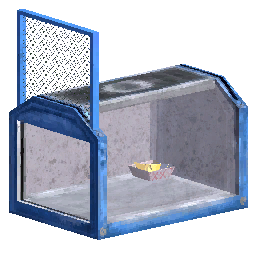
Deployable trap to catch Pests.
Overview
Pest Trap is a deployable, mobile trap item used to capture Pests. It functions as a placeable device that players set in the environment to intercept and detain small hostile or nuisance creatures classified in-game as Pests. The item appears as a single-use or reusable deployable that remains at its positioned location until it catches a target or is removed by the player.
Deployment is performed by placing the trap on the ground at a chosen location; the trap is designed to be positionable so it can be moved and re-laid to cover pathways, chokepoints, or likely Pest spawn routes. Because the trap targets Pests specifically, it does not affect larger enemies or other creature classes; it is intended for dealing with infestations and disrupting small, recurring nuisance spawns.
Practical usage and interaction notes:
- Place traps along common Pest movement corridors, near spawn points, or adjacent to objectives that are frequently overrun to reduce incidental Pest interference.
- Use traps to create safe zones for resource gathering or to protect static structures by spacing multiple traps to cover likely approach angles.
- Traps are most effective when combined with baiting or environmental funneling: positioning them where Pests are funneled by terrain, walls, or other obstacles increases capture rates.
- The item is portable prior to deployment; carry and redeploy traps as front lines shift or infestation patterns change.
- Traps do not engage larger enemy types and will not substitute for direct-combat defenses; use them as a complement to combat units and area-control measures.
- Traps can be removed or collected after deployment where the game permits, allowing recycling of placement when tactical needs evolve.
Pest Trap is a tactical tool for passive Pest control and area denial. Proper placement and integration into broader defensive or resource-protection plans maximize its utility against small, troublesome creature spawns.
Official description
Deployable trap to catch Pests.
References to this (4)
Other entities of this type
- Bag Wall (Block)
- Bag Wall (Corner)
- Bag Wall (Curve)
- Bag Wall (Half Curve)
- Bag Wall (Straight)
- Barricade (Carbon)
- Barricade (Makeshift)
- Barricade (Wood Full)
- Barricade (Wood Half)
- Chopinator
- Disc Turret
- Drop Shield
- Exor Fetish
- Laser Tripmine
- Laser Turret
- Neutrino Emitter
- OX Tower
- Pest Scarecrow
- Radio Scrambler
- Shock Trap
- Snag Vine
- Symphonist Scarecrow
- Tesla Coil
- Tripwire Mine
- X-Ray Tower