Freight Elevator III
Overview
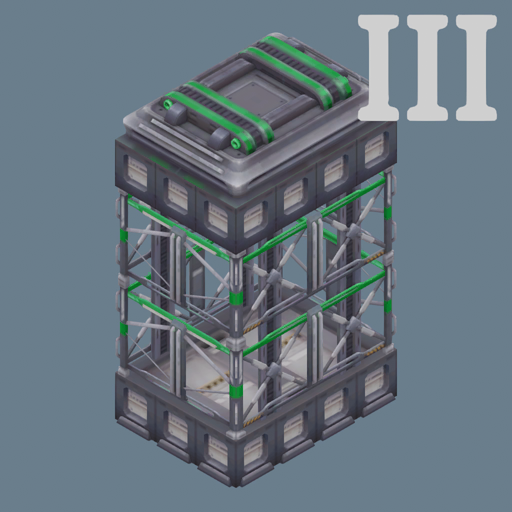
It must be placed in pairs: one top segment and one bottom segment. Those two pieces together define the elevator, and they can be positioned at any height in the world. Once both ends are in place, the game treats the space between them as the elevator’s working span, allowing the shaft to be formed through intervening terrain.
Because the elevator clears terrain automatically, it is useful for connecting separated floors, reaching deeper areas, or establishing a straight vertical route through dense material. Planning the top and bottom endpoints carefully matters, since the pair determines the usable length and placement of the shaft. The building is therefore best treated as a structural transit component rather than a simple decorative or standalone object.
Practical points:
- Place both the top and bottom segments; a single segment does not form a valid
- The two segments can be set at any vertical position in the world, which makes it flexible for multi-level construction.
- Terrain between the two ends is excavated automatically, so the elevator can carve its own path through blocks in the shaft.
- Because it creates a defined vertical route, it is especially useful when you want a clean, direct connection between distant elevations.
Other entities of this type
- Advanced Smelter
- Assembler I
- Assembler II
- Assembler III
- Assembly Line Merger
- Assembly Line Painter
- Assembly Line Producer
- Assembly Line Rail
- Assembly Line Splitter
- Assembly Line Start
- Battery (Large)
- Battery (Small)
- Biomass Burner
- Boiler
- Burner Generator
- Cargo Ship Start Pad
- Cargo Ship Start Pad (Liquids)
- Cargo Ship Target Pad
- Cargo Ship Target Pad (Liquids)
- Casting Machine
- Chemical Processor
- Construction Ship Port
- Construction Warehouse
- Container
- Conveyor Balancer I
- Conveyor Balancer II
- Conveyor Balancer III
- Conveyor Balancer IV
- Conveyor I
- Conveyor II
... +72 (see sidebar for full list)