Rotator

Overview
The Rotator is a building that rotates shapes it receives by one shape part clockwise and outputs the rotated shape. In regular scenarios this rotation corresponds to a 90° clockwise turn; in the hexagonal scenario it corresponds to a 60° clockwise turn. The Rotator performs a deterministic permutation of the shape’s parts and emits the transformed shape on its output.
Other rotation buildings exist with related but different behaviors: the Reverse Rotator rotates shapes one shape part counterclockwise, and the 180° Rotator rotates shapes 180°. Simulated counterparts for rotators also exist in the simulated-machine family: the Simulated Rotator takes a shape signal as input and outputs the shape signal rotated by one shape part clockwise, producing the same 90° (regular) or 60° (hex) effect on signal-level shapes.
Rotation has no effect on how the 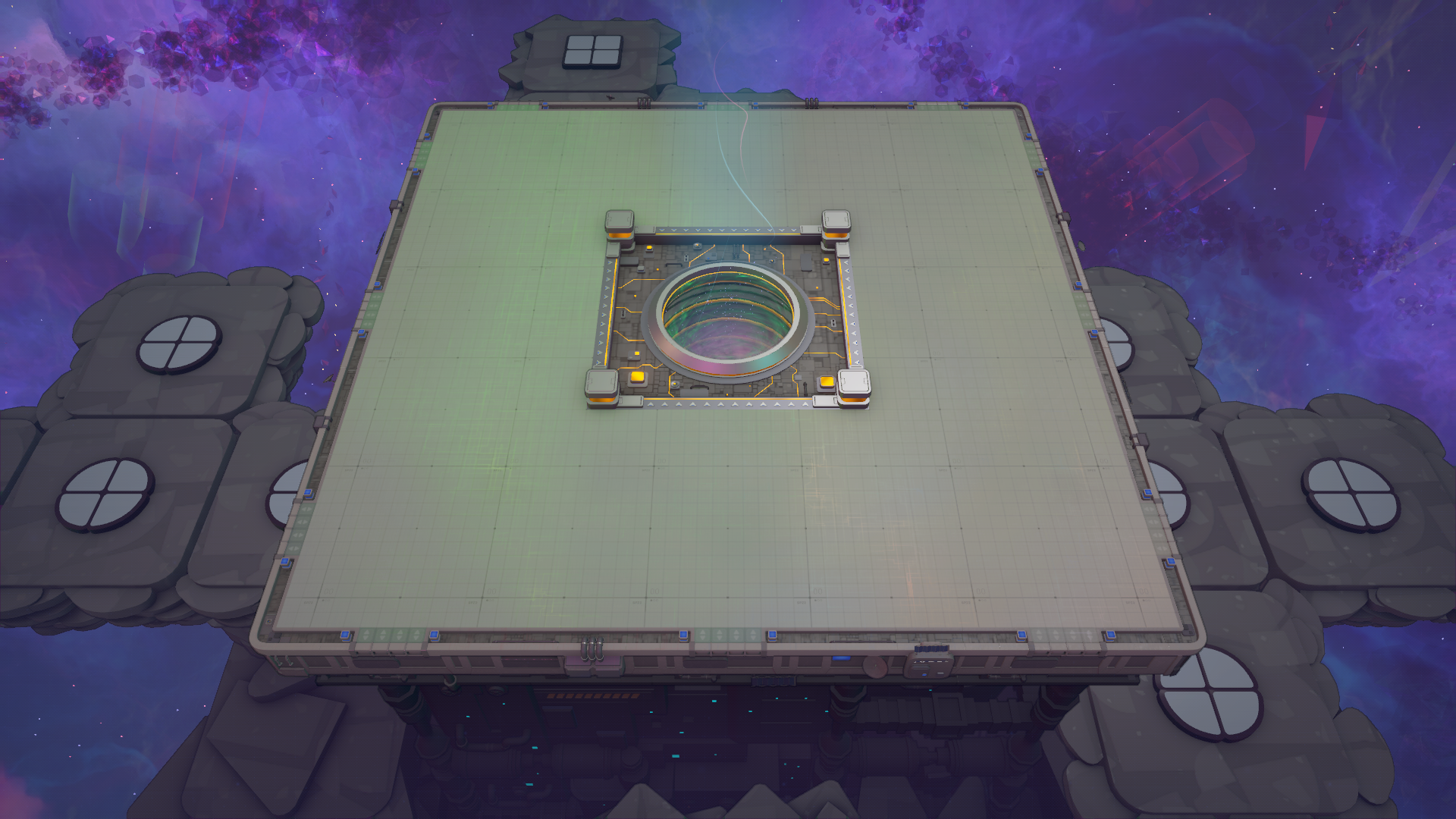


- The Rotator always rotates clockwise by one shape part: 90° in square-grid scenarios, 60° in hex-grid scenarios.
- Reverse Rotator and 180° Rotator are the dedicated alternatives when counterclockwise or full-turn behavior is required.
- Simulated Rotator exists for signal-based (simulated machine) workflows and mirrors the Rotator’s rotation on shape signals.
- Rotation does not change a shape’s identity for the Vortex, but it changes how orientation-sensitive machines (Half Destroyer, Cutter, Swapper, Stacker, Shape Analyzer, flow-control devices) process the shape.
- The “No Alternate Rotators” challenge restricts available rotators to only the Rotator (i.e., disallows alternate rotation buildings).