Shape Patterns
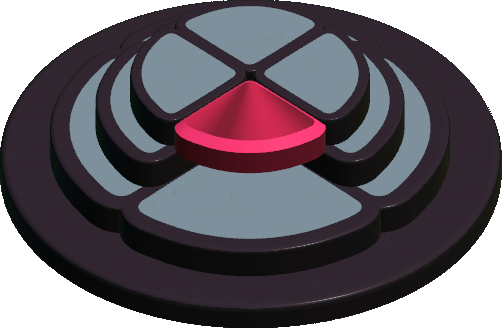
Overview
Shape Patterns are recurring composite arrangements used in the game to describe multi-layered or multi-component shape constructions and the known methods to produce them. Several named patterns and construction methods are documented, each with specific constraints or optimal production ratios. Examples of documented patterns include Standalone Pins, Claw, Gap:Shape: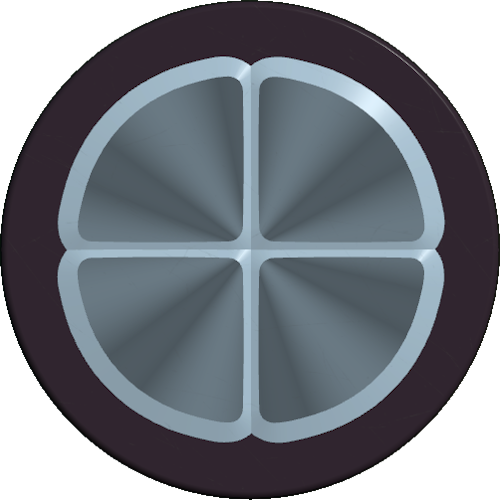
Standalone Pins are shapes composed of a single layer of just pins. There are multiple methods to produce standalone pins. For each method, the listed optimal ratios indicate how many full belts of shapes and/or launchers of fluids are required to obtain a full belt of standalone pins. A feedback loop design allows some of the design’s output to be fed back into its input; when feedback matters, only cutting output shapes in halves is considered (quarter or one-sixth splits are not considered).
Claw is a named pattern whose name comes from the appearance of the shape shown in documentation. This shape cannot be produced by directly stacking layers or by swapping columns; it requires a nontrivial assembly method rather than simple layer stacking or column swaps.
Gap:Shape:Crystal and Shape:Gap:Crystal are two related documented arrangements that combine gaps, generic shape sections, and crystal sections. For both patterns, the gap, the shape section, and the crystal section may each be one or more layers tall; the documentation explicitly notes that all sections can be any amount of layers tall. One documented variant, “Gap:Shape:Gap:Crystal,” is similar to Gap:Shape:Crystal but includes an additional gap at the bottom.
Two “With Crystals” methods and one “Without Crystals” method are listed with optimal ratios for production. The reported optimal ratios are:
- With Crystals, Method 1: with feedback loop requires 4 fluids; without feedback requires 1 shape plus 4 fluids.
- With Crystals, Method 2: with feedback loop requires 4 fluids; without feedback requires 1 shape plus 2 fluids.
- Without Crystals: with feedback loop requires 2 shapes; without feedback requires 3 shapes.
Practical notes and constraints:
- Standalone pins require special handling; documented optimal ratios and methods exist to convert shape belts and fluid launchers into full belts of pins.
- Feedback loop designs can reduce external input requirements by reusing output; documented ratios specify when feedback is applied.
- Only cutting outputs into halves is considered when designing feedback reuse; quarter or sixth splits are not used in the documented solutions.
- Claw patterns cannot be generated by simple stacking or column-swap techniques and therefore need dedicated assembly workflows.
- Gap:Shape:Crystal and Shape:Gap:Crystal patterns allow variable section heights; plan layer counts accordingly when integrating crystals or gaps into larger production chains.
Hints and solution notes are listed in the documentation for each pattern and method, though specific step-by-step procedures are provided in their respective sections.