Olumite Refining and Polymer Processing Guide
If your Olumite line is backing up, your fluids are stranded, or you’re trying to turn raw Olumite into something actually useful, this is the chain to set up. The good news is that Olumite refining and polymer processing is built around fluid-handling, so once you have the right buildings in place, the whole line can become a steady source of fluids and finished polymer products. The trick is not raw speed; it is keeping every fluid with a place to go. Set up the storage, piping, and downstream consumers first, then scale the output once the whole loop is draining cleanly.
Start with the fluid-handling pieces your line depends on
Treat this as a fluid network first and a production line second. 
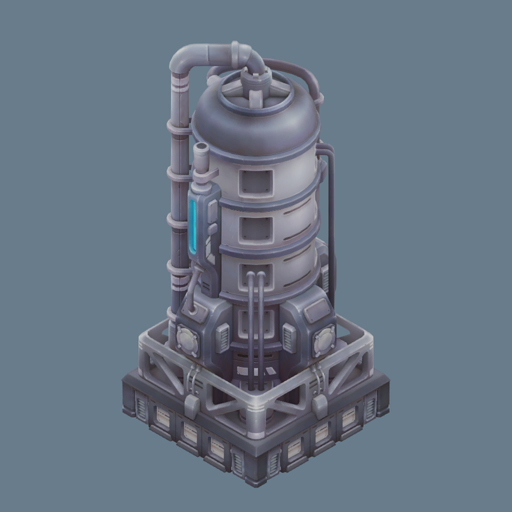
That means your first priority is not the refinery itself, but the logistics around it. Use the Distillation Column and Hydraulic Piston as the structural pieces in the chain, then make sure you have pipe- or tank-style handling in place for Crude Olumite, 
The quick reference below is enough to keep the whole subsystem organized while you build it out.
| Recipe | Time | What to do with it |
|---|---|---|
 |
10s | Use as the slower pacing piece in the chain |
 |
5s | Use as an intermediate pacing piece |
| Olumite Refining Liquid Polymer | 4s | Keep as part of the refining chain |
| Olumite Refining Low Density Olumite | 4s | Keep as part of the refining chain |
| Olumite Refining Olumite Gas | 4s | Keep as part of the refining chain |
 |
7.5s | Keep as a downstream finished product option |
 |
2s | Best short-cycle finished product in this set |
Set up your first refining loop around Crude Olumite
Start by feeding Crude Olumite into the refining branch that gives you the output you need most. Both Olumite Refining Low Density Olumite and Olumite Refining Olumite Gas run in 4 seconds, so the line itself is fast; what matters is whether the next step can keep up. If you have only one reliable consumer or storage buffer ready, feed that branch first and add the other output once the first stream is stable.
Do not chase maximum throughput at the start. Because the refining recipes are short, the common failure is not slow production but a stalled output. If the next machine, tank, or transport line cannot accept the product, the refinery stops being productive and the whole chain backs up behind it. Your early goal is a clean, continuous loop:
If you are choosing where to begin, start with the branch that has the strongest downstream use in your current factory. That gives you a practical reason to keep the fluid moving and prevents you from overbuilding a product you cannot spend yet. Once that first branch is flowing, bring the other refining recipe online and split the input only when both outputs have destinations.
Solve output clogging before you scale production
The biggest mistake in Olumite processing is scaling input before you have a plan for both outputs.
A good rule here is simple: never add another refining step until the current output already has room. If Low Density Olumite has nowhere to go, stop increasing Crude Olumite throughput. If Olumite Gas is backing up, add storage or push it into the next machine before you expand the source. This is especially important because the 4-second refining steps are fast enough to overwhelm weak handling systems very quickly.
The safest setup is a buffer-first layout: input storage, refining, output storage, then consumer or export. That gives you a place for the fluid to go if one side of the chain is temporarily slower. Once that buffer is in place, you can increase flow without immediately choking the refinery.
Turn refined Olumite into polymer products with the shortest chain possible
Once your fluid outputs are stable, move them into polymer processing instead of letting them pile up. Olumite Refining Liquid Polymer is the key step here, and it also runs in 4 seconds, so it fits neatly into the rest of the refinery chain. From there, decide whether you want a fast finished product or a more general-use craft.
Keep the line balanced by matching machine speed to the slowest handoff
Use the slowest machine in the chain as your pacing reference. The Distillation Column runs on a 10-second recipe, so it is the natural place where your buffers matter most. If that piece feeds into faster 4-second refining steps, you need enough storage and transport capacity to absorb the burst and prevent the next stage from starving or jamming.
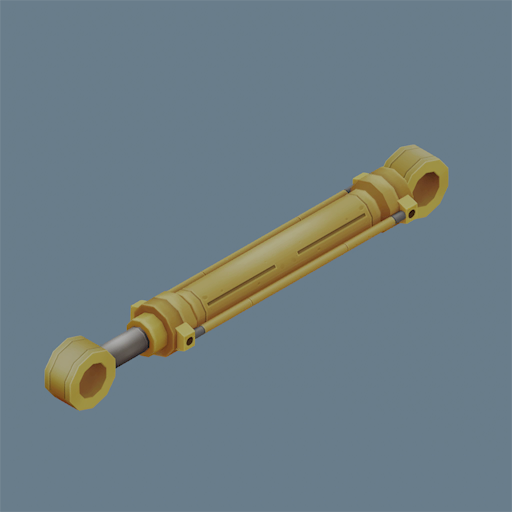
The 5-second Hydraulic Piston sits between those extremes, so treat it as a mid-chain balancing point rather than your bottleneck target. The real pressure comes from the handoffs around it: if the column is slow, buffer around it; if the 4-second refinery steps are fast, make sure the output path is just as fast. Build with room for temporary storage, then only increase throughput after the whole loop has run steadily for a while.
A clean way to think about the whole setup is this: slow steps need buffer, fast steps need drainage. If you respect both,