Transit Tube Crossing
Overview
Transit Tube Crossing is a 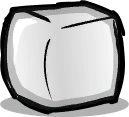
Because it is made of Plastic, Transit Tube Crossing has the same low melting point as Transit Tube and must not be placed in areas above 159.9°C, or it will melt into Naphtha. Two adjacent Transit Tube Crossings do not connect to each other, so they need at least one tile of separation between them for the tube network to link through. They also cannot be used to build across a Heavi-Watt Joint Plate or Heavi-Watt Conductive Joint Plate.
Transit Tube Crossing behaves like a solid block for pressure purposes and does not leak liquids or gases. It can withstand up to 1400 kg of pressure, making it useful for sealing off rooms, preserving atmospheres, and routing tubes through areas where you do not want any fluid or gas exchange. This makes it especially convenient in compact bases where a single tile needs to serve both as a structural barrier and as a tube path.
A useful trick is to place two Transit Tube Crossings connected together so they stabilize each other’s temperature. This helps counteract the tendency for the building to behave as though it is absorbing heat from surrounding vacuum until it eventually melts. In practice, this means long exposed runs in extreme environments need thermal care, especially if the route passes through very hot areas.
- It is a tile-like building: it blocks movement and seals against gas and liquid leaks while still supporting transit travel through the network.
- It cannot be the end of a tube network; proper Transit Tube segments must connect to it.
- Keep it below 159.9°C to avoid melting into Naphtha.
- Do not place two crossings directly adjacent to each other; leave at least one tile between them.
- It cannot bridge over Heavi-Watt Joint Plate or Heavi-Watt Conductive Joint Plate.
- It holds up to 1400 kg of pressure, so it is safe to use as a sealed partition in high-pressure areas.
Other entities of this type
- [DEPRECATED] Steam Turbine
- Acoustic Art Panel
- Aero Pot
- Airborne Critter Bait
- Airborne Critter Condo
- Airborne Critter Lure
- Airborne Critter Trap
- Airflow Tile
- Algae Distiller
- Algae Terrarium
- Amber Fossil
- Anatomy Poster
- Ancient Specimen
- AND Gate
- Anti Entropy Thermo-Nullifier
- Apothecary
- Arcade Cabinet
- Artifact Analysis Station
- Artifact Transport Module
- Atmo Sensor
- Atmo Suit Checkpoint
- Atmo Suit Dock
- Atmo Switch
- Auto-Sweeper
... +534 (see sidebar for full list)