Story Guide: Gravitas Facility, Printing Pod & Neutronium
The Story in Oxygen Not Included sets the narrative backdrop for a colony stranded underground on an asteroid, explains many of the game’s recurring characters and documents found in the world, and provides optional Story Traits—self-contained lore-driven objectives that also give gameplay rewards. Understanding the Story helps interpret Research Portal logs, keepsakes, and the various story-driven points of interest you encounter while playing.
Premise and setting
- Your colony exists on an asteroid that is not the intended destination. The colony’s leader (the player via the Printing Pod/console) wakes in an underground pod and must establish a new settlement and attempt to return to the surface.
- The asteroid and nearby damaged planet contain anomalous materials—
- Much of the game’s lore is delivered through logs, research portal cutscenes, emails, and archaeological finds scattered across the asteroid.
Gravitas Facility and key personnel
- Gravitas Facility is the corporate research organization responsible for the Printing Pod, matter-manipulation tools, many critters and plants, and advanced experimental devices such as the Temporal Bow.
- Director Jacquelyn “Jackie” Stern: Director of Gravitas, driven and obsessed with the Temporal Bow project. Her ambition and willingness to take risks are implied to be central to the events that fractured the planet.
- Dr. Olivia Broussard (security code B111): Head of Bioengineering. She is ethically cautious, discovered problematic experiments (teleportation/cloning implications), and eventually quit the colony project. A brainmap of Olivia is later used as the basis for the colony AI.
- Other named researchers (Dr. Holland, Dr. Ansari, Dr. Bubare, Dr. Ali, Dr. Ross, etc.) appear in communications, research notes, and personal logs, portraying a full research staff with varied personalities and specialties (engineering, robotics, bioengineering, information/statistics).
Major technologies and anomalies
- Printing Pod and Genetic Ooze: The Pod prints living Duplicants and critters from a synthesized bio-organic "Ooze." Printing is central to colony survival—Duplicants can be printed from available blueprints, and new unique blueprints are finite.
- Temporal Bow (Time-manipulation research): Gravitas researchers developed a prototype called the Temporal Bow intended to manipulate time to produce energy. Experiments compressed/expanded tiny time slices, produced unexpected effects, and generated a mysterious substance the team called "
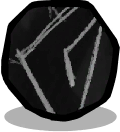
- Neutronium and temporal contamination: Neutronium is described as a metallic-like product of time-manipulation experiments and is associated with an autoimmune-like response of the universe to prevent temporal contamination. Its presence on the asteroid and in readings (including a "Temporal Tear") ties the colony’s plight to broken time/space events.
- Teleportation experiments and cloning ethics: Logs imply some teleportation devices actually produced a copy while destroying the original. The moral implications troubled researchers like Dr. Broussard.
Narrative through the Research Portal and logs
- Interacting with the Research Portal reveals story cutscenes and unlocks certain researches and objects, while also providing fragments of the pre-disaster narrative: lab notes, evacuation notices, ethical objections, and machine logs that gradually reveal what went wrong.
- Research logs include lab experiment notes (e.g., cloning/memory experiments like Experiment 7D and studies into embedding memories/brainmaps), internal memos, and news articles promoting Gravitas successes, which juxtapose public optimism with internal ethical concerns.
- Recurring themes: hubris of large-scale research, ethical conflicts (printing and memory implantation), the drive for limitless energy versus unforeseen consequences.
Story Traits and Keepsakes
- Story Traits are optional world-generation points of interest that introduce a contained narrative and provide tangible rewards or unique interactions when activated. They can be enabled or disabled during world creation.
- Completing a Story Trait typically requires a duplicant to initiate the associated building or object, then fulfill its specific objectives to receive a Keepsake and sometimes unlock additional functionality (examples detailed below).
- Keepsakes are one-off items made of Genetic Ooze rewarded for completing Story Traits. They cannot be stored in containers but can be displayed on Pedestals; each keepsake has an associated decor value and flavor text (e.g., Ceramic Morb, Model Plane, Rusty Toolbox, Critter Collar).
Examples:
- Somnium Synthesizer / Dream journals: Delivering Dream Journals and Oxygen completes the storyline and yields the Model Plane keepsake while unlocking Maximum Aptitude Mode for the Somnium Synthesizer.
- Fossil Quarry / Ancient Specimen: Excavating the fossil POIs completes the Ancient Specimen trait and awards the Critter Collar keepsake.
- Biobot Builder / P.E.G.G.Y.: Building the first P.E.G.G.Y. and interacting with the trait completes it and awards the Toy Bot keepsake.
The Printing Pod’s role and Duplicants
- The Pod acts as narrator/guide from the player's perspective and maintains a sentimental role to Duplicants, who treat it with reverence.
- Duplicants are printed from blueprints stored in the Pod; unique blueprints are limited — when depleted, further Duplicants are copies of existing blueprints.
- Keepsakes and story completion often reference printed duplicants, their memories, and the ethical questions around embedding memories or brainmaps into clones.
Surface, rockets, and the Temporal Tear
- Exploration eventually reveals the surface and a damaged planet similar to the colony’s origin, reinforcing the connection between Gravitas’s time research and planetary catastrophe.
- A "Temporal Tear" visible from the surface is tied to Neutronium readings and is suggested as a gateway to other timelines/universes; rockets can be used to send Duplicants through such points in high-end progression content.
- Rocket logs convey the player’s hope to find a new home or to undo past events by exploring other timelines; they also chronicle the colony’s long-term survival milestones (e.g., Cycle 1000, 1500).
Flavor, tone, and ephemera
- The story is delivered in a mixture of official corporate releases (press statements, promotional materials), personal emails and journals, research logs with encryption levels indicating sensitivity, and environmental finds.
- Bite-sized pieces (office memos, staff chatter about pets, or party invitations) humanize the staff and contrast with the darker consequences of the experiments.
- Epitaphs and memorial texts provide somber flavor for fallen Duplicants and emphasize the cyclical nature of printing and loss.
How the Story affects gameplay
- Story elements offer optional goals and rewards (keepsakes, building unlocks, special modes) that can shift player strategy.
- Research Portal interactions unlock technologies and reveal hazards or POIs; activating or ignoring them changes what narrative content and unlocks appear.
- Knowing the lore can recontextualize late-game elements (
Summary
- The Story weaves corporate ambition, experimental hubris, and human-scale drama into the survival gameplay loop. It is revealed piecemeal through Research Portal cutscenes, logs, and Story Traits; engaging with it yields unique rewards and deeper context for the weird materials and phenomena you encounter on the asteroid.
Pages featured in this guide
- buildingResearch Portal
- buildingRocket
- buildingLadder
- buildingFrozen Fossil
- foodVitamin Chews
- buildingMission Control Station
- buildingPrinting Pod
- achievementASTEROID_DESTROYED
- foodFrost Burger
- buildingIce Block
- foodPacu Fillet
- buildingPrinterceptor
- elementSour Gas
- buildingSpace Cadet Centrifuge
- buildingTrailblazer Lander
- buildingAmber Fossil