power
Power is the backbone of every industrial chain in Captain of Industry. Reliable generation, buffering, and conversion keep machines running, prevent idling, and let you scale production without constant blackouts.
Mechanical power basics

Generators and shaft behavior
- power_generator converts mechanical energy into electricity. Its efficiency drops as it spins more slowly.
- power_generator_large is an optimized version with lower friction and better efficiency, but its efficiency also falls as shaft speed decreases.
- Flywheel stores mechanical energy as rotational inertia. It slowly loses energy only when every other entity on the same shaft is idle.
- High Pressure Turbine II is affected by shaft charge: efficiency drops when the connected shaft is heavily charged, and it also loses efficiency while starting up.
- Low Pressure Turbine improves power production efficiency by reusing low-pressure steam to create mechanical power.
Controlling turbine output
- turbine_control can be enabled manually on a steam turbine to stop steam waste. When shaft power is high, it shuts the turbine off; when shaft power falls, it restarts it.
- Restarts are not instant, so a shaft should be paired with mechanical storage for a stable power supply.
- High Pressure Turbine II also supports auto-balance, idling when shaft charge is high and restarting when it falls enough to resume efficient operation.
Steam and thermal power
Steam is the most important working fluid for power generation and heat recovery. Many systems turn steam into electricity, and others recycle steam to improve water or fuel efficiency.
Boilers and steam production
- boiler produces high-pressure steam by burning bulk fuel such as coal.
- boiler_electric produces high-pressure steam by boiling water with electricity.
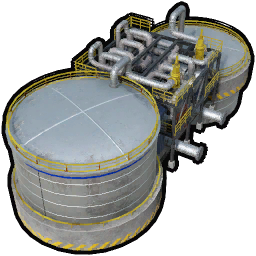
- thermal_storage uses steam to heat a tank of molten salt, storing thermal energy that can later be used to boil incoming water back into steam.
Water recovery and steam reuse
- cooling_tower improves a power plant’s water efficiency by recovering part of the steam and turning it back into water.
- thermal_desalinator can use existing steam sources to desalinate water. It can be used alongside power generation and water recovery systems to reduce the net cost of steam handling.
- super_heated_steam is super pressurized steam heated to 800 °C and can be used to produce hydrogen through the sulfur-iodine cycle.
Waste heat and steam recovery chains
- incineration_plant burns waste with much better efficiency than a basic burner. The process is energy positive and generates steam.
- arc_furnace_ii includes cooling that allows higher operating temperatures, higher throughput, and reuse of some excess heat. It also increases power demand.
Fuel-based and nuclear power
Fuel-based reactors and generators provide dense, high-output power for later stages of the game, but they require careful fuel handling and waste management.
Nuclear reactors
- nuclear_reactor is a thermal reactor that maintains a nuclear chain reaction from enriched uranium rods. It generates steam and can be set up to provide up to its rated power at full output.

- The reactor has two heat exchange systems: the grouped ports on the edge are the main heat exchangers for steam production, while the separate port on the main building is for emergency cooling only.
Advanced nuclear reactor
- nuclear_reactor_ii is an advanced thermal reactor with increased throughput.
- It can use MOX fuel.
- It can regulate its power automatically if computing is provided, reducing output when demand or reactor conditions allow it.
Fast breeder reactor
- fast_breeder_reactor uses fast neutrons to sustain fission.
- It requires highly enriched fuel and produces large amounts of heat.
- Its fuel is dissolved in molten salt rather than stored in solid rods.
- It operates at higher temperatures to produce super pressurized steam (800 °C).
- If the core overheats and no emergency cooling is available, it automatically drains its molten fuel, losing all fuel and damaging the reactor.
- The blanket around the core breeds fissile fuel and can also burn transuranic isotopes.
Nuclear waste handling
- nuclear_reprocessing_plant separates fissile products from radioactive material so the waste can decay faster and be disposed of more reasonably.
- The isolated waste is vitrified into solid form with molten glass for easier storage.
- radioactive_waste_storage is a special underground storage facility for safely managing radioactive waste.
Electricity-heavy industrial consumers
Several late-game industrial buildings consume substantial power and should be planned around a strong grid.
Arc furnaces and electrolysis
- arc_furnace melts metals using a powerful electric arc. It consumes a significant amount of power and uses graphite anodes that are partially spent during operation.
- arc_furnace_ii adds a cooling system, allowing higher temperatures, higher throughput, and some heat reuse, but it also increases power requirements.
- aluminum_cell uses electrolysis to extract pure aluminum from molten alumina. It consumes large amounts of electricity and requires periodic replacement of carbon electrodes.
- electrolyzer decomposes a product into simpler substances by passing electric current through it.
Other power-hungry processes
- data_center hosts server racks that provide computing, but each rack also needs power, cooling, and maintenance.
- mainframe_computer provides computing as a resource for advanced systems, but it is an early technology with low efficiency.
Solar and other renewable generation
Renewables are useful for reducing fuel use, especially in early and mid game, but they depend on site conditions and available sunlight.
Solar power
- solar_panel converts sunlight into electricity. Its efficiency depends on how sunny the surface is.
- solar_panel_mono uses monocrystalline silicon. It is more expensive to produce, but it provides more energy.
- clean_panels is a maintenance procedure for solar panels that increases their output.
Other generation and conversion
- basic_diesel pumps the island’s limited oil reserves and converts them into diesel. It is not very efficient.
- basic_distiller allows low-grade diesel distillation, but is inefficient and produces a lot of waste.
- evaporation_pond_heated produces salt by evaporating residual water from brine, accelerated by electric heaters.
- anaerobic_digester breaks down biodegradable material without oxygen to produce fuels and fertilizer.
Power support infrastructure
Power networks rarely work well in isolation. Stable systems also need buffering, automation, and supporting logistics.
Mechanical buffering
- Flywheel helps smooth fluctuations in shaft-driven systems by storing and releasing mechanical energy.
- turbine_control is useful when steam supply and shaft demand vary, because it prevents wasting steam during overproduction.
Water and utility support
- seawater_pump_tall is a larger seawater pump that can be placed higher above ocean level, but it requires more power to operate.
- fuel_station and fuel_station_ii reduce travel time for machines and trucks by refueling them automatically, helping keep mining and logistics powered without interruptions.
Practical planning
A good power grid usually combines three layers:
- Primary generation for steady baseline supply, such as nuclear, fuel-based generation, or efficient steam recovery.
- Buffering through flywheels, steam systems, and thermal storage to absorb short-term demand swings.
- Demand control through turbine automation, reactor regulation, and careful placement of high-consumption buildings.
The safest power networks are the ones that treat electricity, steam, and mechanical power as one connected system rather than separate problems.
Pages featured in this guide
- buildingBoiler (gas)
- buildingPower generator (large)
- buildingArc furnace
- researchArc furnace II
- buildingBoiler
- buildingBoiler (electric)
- buildingCooling tower
- buildingAluminum cell
- researchBasic diesel
- buildingData center
- buildingDiesel generator II
- researchNuclear reactor
- buildingTransformer
- buildingFlywheel
- buildingLow-pressure turbine
- buildingPower generator