Conveyor Chute
Overview
Conveyor Chute is a shipping endpoint for the Conveyor Rail system. When materials reach the end of a rail, they are dropped back into the world as loose items. It serves as a simple way to unload a conveyor network without requiring a receiving building that stores or buffers the cargo.
In practice, Conveyor Chute is often preferable to Conveyor Receptacle in most situations because it does not block items in the Conveyor Rail if unloading is delayed. This makes it more forgiving for long or busy transit lines. Its main drawback is that the delivered items fall onto the ground, which creates debris and lowers Decor in the surrounding area. If preserving Decor matters, Conveyor Receptacle remains the better choice.
A common placement rule is to keep Conveyor Chutes at least one tile above floor level. If they are installed too low, the exiting items can get stuck in nearby tiles when they are dropped. Leaving enough vertical space helps the cargo land cleanly and keeps the unloading area from clogging.
Compared with a transport system built from Conveyor Loader, Conveyor Rail, and Conveyor Chute, using an Auto-Sweeper and an 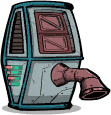
- Materials dropped from the end of a rail are released into the world as loose items.
- It is less likely than Conveyor Receptacle to cause rail backups when unloading is delayed.
- It reduces Decor in the area because the cargo becomes debris on the ground.
- Place it at least one tile above the floor to avoid items getting trapped in tiles.
- For high-throughput logistics, an Auto-Sweeper plus Automatic Dispenser setup is usually more efficient.
References to this (1)
Other entities of this type
- [DEPRECATED] Steam Turbine
- Acoustic Art Panel
- Aero Pot
- Airborne Critter Bait
- Airborne Critter Condo
- Airborne Critter Lure
- Airborne Critter Trap
- Airflow Tile
- Algae Distiller
- Algae Terrarium
- Amber Fossil
- Anatomy Poster
- Ancient Specimen
- AND Gate
- Anti Entropy Thermo-Nullifier
- Apothecary
- Arcade Cabinet
- Artifact Analysis Station
- Artifact Transport Module
- Atmo Sensor
- Atmo Suit Checkpoint
- Atmo Suit Dock
- Atmo Switch
- Auto-Sweeper
... +534 (see sidebar for full list)
Related pages
- buildingConveyor Loader
- buildingConveyor Meter
- buildingConveyor Receptacle
- buildingConveyor Bridge
- buildingConveyor Rail
- buildingConveyor Rail Element Sensor
- buildingConveyor Rail Germ Sensor
- buildingLiquid Channel
- buildingLiquid Pipe
- buildingBottle Filler
- buildingConveyor Loader Fitting
- buildingConveyor Rail Thermo Sensor