Bristle Blossom

Overview
Bristle Blossom is a domesticated food plant that produces 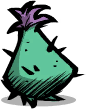


Bristle Blossom can be planted in a Planter Box, Farm Tile, or Hydroponic Farm. The Hydroponic Farm is the preferred option because the plant requires 20 kg/cycle of 



When fully grown, Bristle Blossom provides 15 Decor in a 2-tile radius, making it a modest decorative plant as well as a food source. Its growth is driven by light, so it pairs well with lighting setups that can keep the farm illuminated without overheating the plants. Shine Bugs are especially useful here because they provide light without adding heat, while Lamps, Ceiling Lights, and Sun Lamps can eventually cook the crop if used too close for too long.
A lit Bristle Blossom also interacts with the Floral Scent germ. At 100% growth, it can produce Floral Scent in nearby gas tiles. Duplicants exposed to Floral Scent receive a small Stress reduction, but Duplicants with the Allergic reaction suffer an Allergic Reaction instead, so allergy-prone duplicants should be kept away from the farm.
Bristle Blossom is one of the plant options that can be useful for composting, since it turns water into dirt when harvested and processed through the food chain. Its Blossom Seed can also be used in the Apothecary to make Allergy Medication with 1 Blossom Seed + 1 kg 
Useful harvest chain and production notes:
- Bristle Berry: 1600 kcal per harvest.
- Gristle Berry: made from Bristle Berry, producing 2000 kcal total.
- Berry Sludge: made from Bristle Berry, producing 4000 kcal total.
- Stuffed Berry: made from Gristle Berry, producing 4400 kcal total.
Because its output is tied to light and water, Bristle Blossom is most efficient when placed in a well-controlled indoor farm with steady irrigation, reliable lighting, and enough cooling to offset heat from the chosen light source.
References to this (13)
Other entities of this type
- Alveo Vera
- Arbor Tree
- Balm Lily
- Bliss Burst
- Bluff Briar
- Bog Bucket
- Bonbon Tree
- Buddy Bud
- Buried Muckroot
- Carved Lumen Quartz
- Dasha Saltvine
- Dew Dripper
- Dusk Cap
- Gas Grass
- Grubfruit Plant
- Guide/Agriculture
- Hexalent
- Hydrocactus
- Idylla Flower
- Jumping Joya
- Lura Plant
- Mealwood
- Megafrond
- Mellow Mallow
... +23 (see sidebar for full list)