Fullerene
Overview
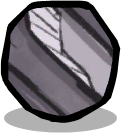
Fullerene is a refined carbon-based element used as an advanced industrial material in Oxygen Not Included. In the game, it is a high-value resource tied to late-game space and rocket progression, and it also serves as a critical ingredient in the production of 
In the base game, Fullerene can be obtained from cargo bays on fully explored asteroids when a rare resource is present, with the resource making up more than 1% of the asteroid’s mass. It can also appear in larger quantities on gilded asteroids, where deposits are much more abundant. In Spaced Out!, it is associated with the Gilded Asteroid Field, where it can be harvested on rocket missions. After the Temporal Tear Opener has been fired, Fullerene Meteors begin falling on that planetoid every day, delivering between 3 and 20 kg of Fullerene each time; this meteor shower stops after reloading the game.
Fullerene can also be manufactured in the Molecular Forge. One recipe combines 90 kg 


Its main practical use is as an ingredient for Super Coolant. The Molecular Forge converts 1 kg Fullerene, 49.5 kg 

Outside the game, fullerene refers to a family of carbon molecules arranged in closed or partially closed meshes of rings. The best-known form is C60, a spherical molecule made of connected hexagons and pentagons that resembles a soccer ball. That form is also called buckminsterfullerene, and it is the source of the material’s name. In real-world science, fullerenes are studied for applications in medical imaging, gene therapy, photovoltaic technology, and nanotechnology, though Oxygen Not Included uses it purely as a specialized late-game resource.
- Fullerene is most important as a Super Coolant ingredient.
- The Molecular Forge can either create it from other materials or use it directly in Super Coolant production.
- In space-focused play, gilded asteroid content and meteor showers are the main renewable sources.
- Because it is tied to advanced space acquisition and high-end processing, Fullerene is usually treated as a strategic bottleneck rather than a bulk industrial input.