Meat

Overview
Meat is a food resource obtained primarily from dead critters. Most critters drop a fixed amount of meat when they die, and baby critters produce the same amount as adults. In most cases, different morphs of the same critter also yield the same amount of meat.
A few critters do not drop meat at all, and some instead drop other special food resources rather than raw meat. Because of that, ranching and slaughter outcomes vary by species, but for standard meat production the important point is that death is what creates the resource.
Meat can be processed into cooked food:
- Inside the Microbe Musher, it can be cooked into
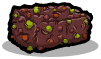
- Inside the Electric Grill, it can be cooked into

For ranching and food planning, meat yields vary widely across critters, from very small amounts to large hauls from bigger animals. The exact yield depends on the critter type, but the game consistently treats babies and adults the same for meat output, so breeding age does not change the total drop.
References to this (7)
Other entities of this type
- Barbeque
- Berry Sludge
- Bog Jelly
- Bristle Berry
- Cooked Seafood
- Curried Beans
- Dried Berry Pie
- Dried Curried Beans
- Dried Frost Burger
- Dried Mushroom Quiche
- Dried Mushroom Wrap
- Dried Pepper Bread
- Dried Spicy Tofu
- Dried Stuffed Berry
- Dried Surf'n'Turf
- Fish Taco
- Fried Mushroom
- Frost Bun
- Frost Burger
- Gristle Berry
- Grubfruit
- Grubfruit Preserve
- Hexalent Fruit
- Jawbo Fillet
... +50 (see sidebar for full list)