Ice Cave Biome
Overview
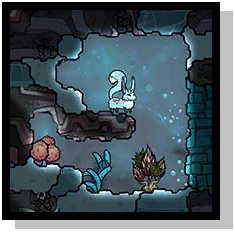
The Ice Cave Biome is an extremely cold starting biome, and because it is a starting biome, many early colony needs are available there for a short time. Its low temperature makes it one of the hardest starting environments to work in, especially because food options are very limited at the beginning.
The cold also applies an Athletics penalty to Duplicants, so movement through the biome is noticeably slowed unless they are protected. Wood Heaters, Space Heaters, or Warm Coats can be used to offset this and make travel easier. The biome’s composition also makes temperature management especially important: much of it is made of liquefiable materials, so if the temperature rises too far above freezing, large sections can melt away and leave very few solid tiles behind.
- Food production is constrained early on, but Pikeapple Bushes are a native crop that serves as a useful early food source. They grow at a rate similar to

- Floxes can use the biome as an alternative source of resources associated with Arbor Trees, giving them a way to function without depending on forest biomes.
- Avoid overheating the area unless you are prepared for rapid melting and the collapse of the biome’s solid terrain.
References to this (2)
Other entities of this type
- Aquatic Biome
- Barren Biome
- Biome
- Cool Pool Biome
- Feather Biome
- Forest Biome
- Garden Biome
- Jungle Biome
- Magma Biome
- Marsh Biome
- Metallic Biome
- Moo Biome
- Nectar Biome
- Niobium Biome
- Ocean Biome
- Oily Biome
- Radioactive Biome
- Regolith Biome
- Rust Biome
- Sandstone Biome
- Space Biome
- Swampy Biome
- Tundra Biome
- Wasteland Biome
... +1 (see sidebar for full list)