Space Biome
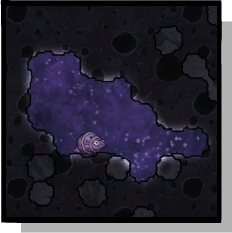
Overview
The Space Biome is the exposed outer layer found above the surface of an asteroid. Its upper region is a vacuum, and the lower region is made up of empty space tiles that can be opened to the vacuum when exposed. This biome is not a normal source of food, water, or living space; instead, it serves as the planet’s boundary and the place where solar power, telescopes, and rocket access become relevant.
The biome contains no metal ore, raw mineral, other solids, liquids, gases, plants, or critters in its base form. Surface Crags is the variant with less mass, and meteor showers periodically add more 
Space Exposure is the biome’s defining hazard. Any affected tile will continuously remove 100 kg of liquid per second or 100 g of gas per second, converting the area into vacuum. Background buildings such as 
A number of planetoid starting variants can alter the surface region. The Mini Metal variant contains more Copper Ore and 


For space missions, the biome is part of a much larger starmap and rocket system. Duplicants can settle multiple planetoids, and rockets must launch from a Command Capsule over a Gantry with the required fuel and cargo conditions met. In practice, the Space Biome is where endgame exploration begins: it marks the transition from colony survival to interplanetary expansion, and it is the source of solar access, rocket infrastructure, and the hazards that come with opening the colony directly to space.
References to this (18)
- achievementREACTOR_USAGE
- biomeMetallic Biome
- buildingAirflow Tile
- buildingBeach Chair
- buildingBiological Cargo Bay
- buildingJet Suit Dock
- buildingMesh Tile
- buildingRocket Wall
- buildingSpacefarer Module
- buildingTempshift Plate
- elementCopper Ore
- elementGold
- elementIron
- elementSteel
- elementWater
- geyserCool Salt Slush Geyser
- geyserGeyser
- plantGas Grass
Other entities of this type
- Aquatic Biome
- Barren Biome
- Biome
- Cool Pool Biome
- Feather Biome
- Forest Biome
- Garden Biome
- Ice Cave Biome
- Jungle Biome
- Magma Biome
- Marsh Biome
- Metallic Biome
- Moo Biome
- Nectar Biome
- Niobium Biome
- Ocean Biome
- Oily Biome
- Radioactive Biome
- Regolith Biome
- Rust Biome
- Sandstone Biome
- Swampy Biome
- Tundra Biome
- Wasteland Biome
... +1 (see sidebar for full list)