Agriculture Guide: Farming & Food Production
Agriculture is the backbone of farm life in Stardew Valley: it covers crops, fruit trees, animal feed, soil management, and the special buildings that keep everything productive. Good farming turns a bare plot into a steady source of money, food, crafting materials, and bundle progress.
Getting started on the farm
On most farm maps, Mayor Lewis gives you 15 

Your first days usually go like this:
- clear a small area with your axe, pickaxe, and scythe
- till soil with the Hoe
- plant seeds
- water every planted tile each day until the crop is ready
The Watering Can can be refilled at any water source, including the kitchen sink after a house upgrade. Crops that are not watered do not die, but they do not grow that day.
Core crop rules
Crops are planted on tilled soil. Fertilizer is placed on tilled soil as well, and only one fertilizer type can exist on a tile at a time.
Watering and growth
- Outdoor crops do not need watering on rainy days.
- Indoor crops, including those in the
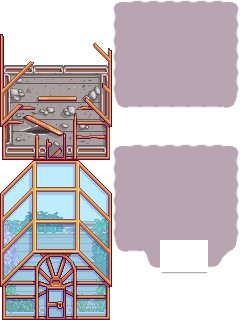
- Crops grown from Winter Seeds still need watering in winter.
- Mature single-harvest crops do not need watering after they are fully grown.
- Crops that regrow after harvest continue to need water.
- Retaining Soil can keep soil watered for extra days.
- Sprinklers water crops automatically every morning.
Harvesting tools
Most crops are collected by hand, but some require or allow a 


- Rice Shoots and


- many crops that create plant-only harvests such as


Farm infrastructure
Silo and Hay
- Grass can be cut with a scythe to generate Hay if you have a

- Hay from Grass is placed directly into Silos.
- Hay from Wheat goes into inventory instead.
- Blue Grass produces 2 Hay when cut with a scythe.
- Grass Starter can be used to create fresh grass patches instantly.
A Silo is one of the most useful early buildings because it lets you store Hay before winter. Animals eat Hay when no fresh Grass is available, and winter feeding depends on stored supplies.
Fences and gates
Fences:
- block players, farm animals, and grass spread
- decay over time unless protected by the

- can hold Torches
- can be crossed through Gates
A closed gate keeps livestock contained. Fences are especially useful for controlling grazing and for preserving grass patches.
Sprinklers
Sprinklers water crops every morning at 6am.
- Sprinkler: waters 4 surrounding tiles
- Quality Sprinkler: waters 8 tiles in the surrounding 3x3 area
- Iridium Sprinkler: waters 24 tiles in the surrounding 5x5 area
Sprinklers do not water Garden Pots, and they cannot be placed on sand. Their range can be improved with Pressure Nozzles.
Fertilizer support
The main farming fertilizers are:
- Basic Fertilizer
- Quality Fertilizer
- Deluxe Fertilizer
- Speed-Gro
- Deluxe Speed-Gro
- Hyper Speed-Gro
- Basic Retaining Soil
- Quality Retaining Soil
- Deluxe Retaining Soil
- Tree Fertilizer
Deluxe Fertilizer is the only way to grow iridium quality crops. Fertilizer can be applied before or after planting in many cases, but some types must be placed before the seed sprouts.
The Greenhouse
The
- crops can be grown in any season
- crops still need water
- crows do not attack crops there
- scarecrows are unnecessary
- crops that regrow continue to regrow indefinitely
- fruit trees can be planted around the outer area
- Bee Houses produce no honey inside the Greenhouse
- Giant Crops cannot grow there
The crop area is a 10-row-by-12-column plot. Sprinklers can be placed on the wooden border to water the interior. Since the field is fully usable year-round, the Greenhouse is ideal for high-value regrowth crops and long-term tree placement.
Garden Pot farming
A Garden Pot lets crops grow indoors and can also be used on the farm or Ginger Island Farm.
- indoors, it can grow crops from any season
- outdoors on The Farm, it only accepts current-season crops
- it cannot grow Ancient Seeds
- crows do not attack potted crops
- Giant Crops cannot grow in Garden Pots
Garden Pots are useful for decorative indoor farming and for expanding seasonal flexibility outside the Greenhouse.
Crop types and major patterns
Single-harvest crops
These crops are planted, grown, and then harvested once.
Examples include:


- Carrot

- Powdermelon

Some single-harvest crops can become Giant Crops if planted in a proper 3x3 block and watered normally during growth. The crops that can do this include Cauliflower, Melon, Pumpkin, Powdermelon, and Qi Fruit.
Regrowing crops
Regrowing crops continue producing after maturity.
Examples include:


- Broccoli
- Summer Squash


Regrow crops are excellent for the Greenhouse because they never disappear at season changes there.
Trellis crops
Trellis crops cannot be walked through while alive, so they require planning.
The trellis crops are:
- Green Bean
- Hops
- Grape
Dead trellis plants can be walked through. These crops are best laid out in rows or blocks with access paths.
Seasonal crop overview
Spring crops
Common Spring options include:


- Wild Seeds (Spring)
Parsnip grows in 4 days.
Garlic also grows in 4 days and becomes available from Year 2.
Cauliflower takes 12 days and can become a Giant Crop.
Strawberry is one of the strongest spring regrow crops, and can even be pushed to multiple harvests in Year 1 with careful timing and Speed-Gro.
Summer crops
Common Summer options include:


- Summer Squash
- Blue Jazz does not grow in summer; it is a spring flower
Blueberry is a strong regrowth crop.
Corn grows in both Summer and Fall.
Hops are valuable for brewing Pale Ale.
Melon can become a Giant Crop.
Poppy is unusual because it is a universally hated gift except by Penny.
Fall crops
Common Fall options include:


- Broccoli

- Sunflower
- Wild Seeds (Fall)
Cranberries and Eggplant are strong regrowth crops.
Pumpkin can become a Giant Crop.
Grape is both a forageable and a standard crop, depending on season and seed source.
Winter and special growing options
Normal outdoor farming is limited in winter, but several options still work:

- Fiber Seeds
- crops grown in the Greenhouse
- crops in Garden Pots
- crops on Ginger Island
- some multi-season crops planted before winter begins
Fiber Seeds do not require watering and can be planted in any season. They are useful for utility farming and for preserving fertilizer on the last days of Fall.
Multi-season crops
Some crops survive season transitions.
Summer to Fall
If planted before the season change, they continue growing normally into the next season. Fertilizer under them does not disappear when the season changes.
Spring to Summer
Coffee Beans can be planted in Spring or Summer and will continue growing through the season change.
Year-round or indoor-only crops


Fruit trees and tea bushes
Fruit Trees
Fruit trees take 28 days to mature. After that, they produce one fruit per day during their season, and fruit can accumulate for up to three days before harvest.
Important rules:
- the sapling must be planted in the center of a clear 3x3 area
- fruit trees do not need watering
- they do not die in winter
- Tree Fertilizer cannot be used on Fruit Trees
- they can be planted in the Greenhouse
- while immature, the surrounding area must stay clear
Fruit trees include:
- Apricot Tree
- Cherry Tree
- Apple Tree
- Banana Tree
- Mango Tree
Tea Bushes
A Tea Bush grows from a Tea Sapling. It matures in 20 days and then produces one Tea Leaf each day during the last week of each season. In winter, it also produces indoors. Tea Bushes, like fruit trees, grow without watering and cannot use Tree Fertilizer.
Bee Houses and flower honey
Bee Houses are a major agriculture multiplier.
- flowers planted near a Bee House change the honey type
- flower honey is more valuable than Wild Honey
- a single flower can service many Bee Houses
- the honey type is determined when harvested
- if the flower is harvested first, the honey becomes Wild Honey
Flowers that matter for honey production include:

A flower must be within range of the Bee House to affect honey. Fairy Rose Honey is the most valuable flower honey type.
Grass, Blue Grass, and feed management
Grass
Grass spreads naturally across the farm during spring, summer, and fall. It goes dormant in winter.
- it spreads to nearby open tiles
- it can be planted instantly with Grass Starter
- it can be cut with a scythe, sword, or dagger
- only scythe cutting produces Hay
- a Silo is required to store hay from grass cutting
Blue Grass
Blue Grass appears naturally on Meadowlands Farm. It can also be planted elsewhere with Blue Grass Starter.
Special properties:
- animals gain more friendship from eating it
- animals consume fewer tufts from it
- scything it produces 2
- it does not spawn naturally on other farm maps
Feeding animals
Animals in Coops and Barns eat 1 Hay per day whenever fresh Grass is unavailable. The Hopper helps move Hay from Silos to the feeding bench, and Deluxe buildings can autofeed.
During winter, stockpiling enough Hay before the season starts is essential. If stored Hay runs out, you must buy more, scythe any leftover grass, or grow Wheat in a suitable indoor or island location.
Animal products and processing
Animal products are a large part of agriculture once your farm expands.
Egg and milk processing
- all eggs can be made into

- larger eggs produce higher-quality mayo

- milk recipes accept Milk,


Goat Milk
A Goat produces one Goat Milk every two days if fed. High friendship and mood can upgrade it to Large Goat Milk.
Truffles and pigs
Pigs dig up Truffles outside the barn when conditions are right. Truffles can be processed into 
Wool and cloth

Useful crop-processing buildings
Mill
The Mill turns crops into products:


The input is placed into the Mill, and the result appears the next morning.
Seed Maker
The Seed Maker is important for crop multiplication. It can also produce useful seasonal seeds from forage items like 
Keg and Oil Maker
Important crop-processing chains include:


Dehydrator
The Dehydrator turns five fruits or edible mushrooms into dried products.
Junimo Hut harvesting
A 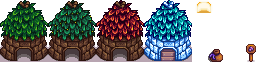
Key points:
- Junimos harvest most farm crops, including flowers and tea leaves
- they also harvest scythe crops and trellis crops
- they can move through trellis tiles and bushes
- you receive no Farming XP for crops harvested by Junimos
- crop quality still depends on your Farming skill
- harvesting can be toggled on or off from the hut
Junimo harvesting is especially useful for dense trellis layouts and large late-game farms.
Notable crop notes

- Sunflowers drop 1

- Tulips and Fairy Roses come in multiple colors, which affects inventory and storage space.
- Poppies also have multiple color variants.

- Carrots grow very quickly and can be fed to a Horse.
- Fiber Seeds can be planted at the end of Fall to keep fertilizer from disappearing on Winter 1.
Practical farming priorities
A strong farm usually develops in layers:
- Grow food and quest crops early with Parsnips and other fast vegetables.
- Build a Silo before relying on animals.
- Set up sprinklers so daily watering stops consuming your energy.
- Plant regrow crops for steady income.
- Use the Greenhouse for year-round high-value crops.
- Add fruit trees and tea bushes for passive long-term production.
- Automate harvesting with Junimos once the farm is large enough.
The most efficient farms combine crop income, animal products, honey, and processed goods into a single production chain.